

Kevin Roche stands as one of architecture’s most influential figures, earning the prestigious Pritzker Prize in 1982—widely considered architecture’s equivalent to the Nobel Prize. When we look at his remarkable career spanning decades, we find a master architect whose vision transcended mere building design to embrace a deeply humanistic philosophy.
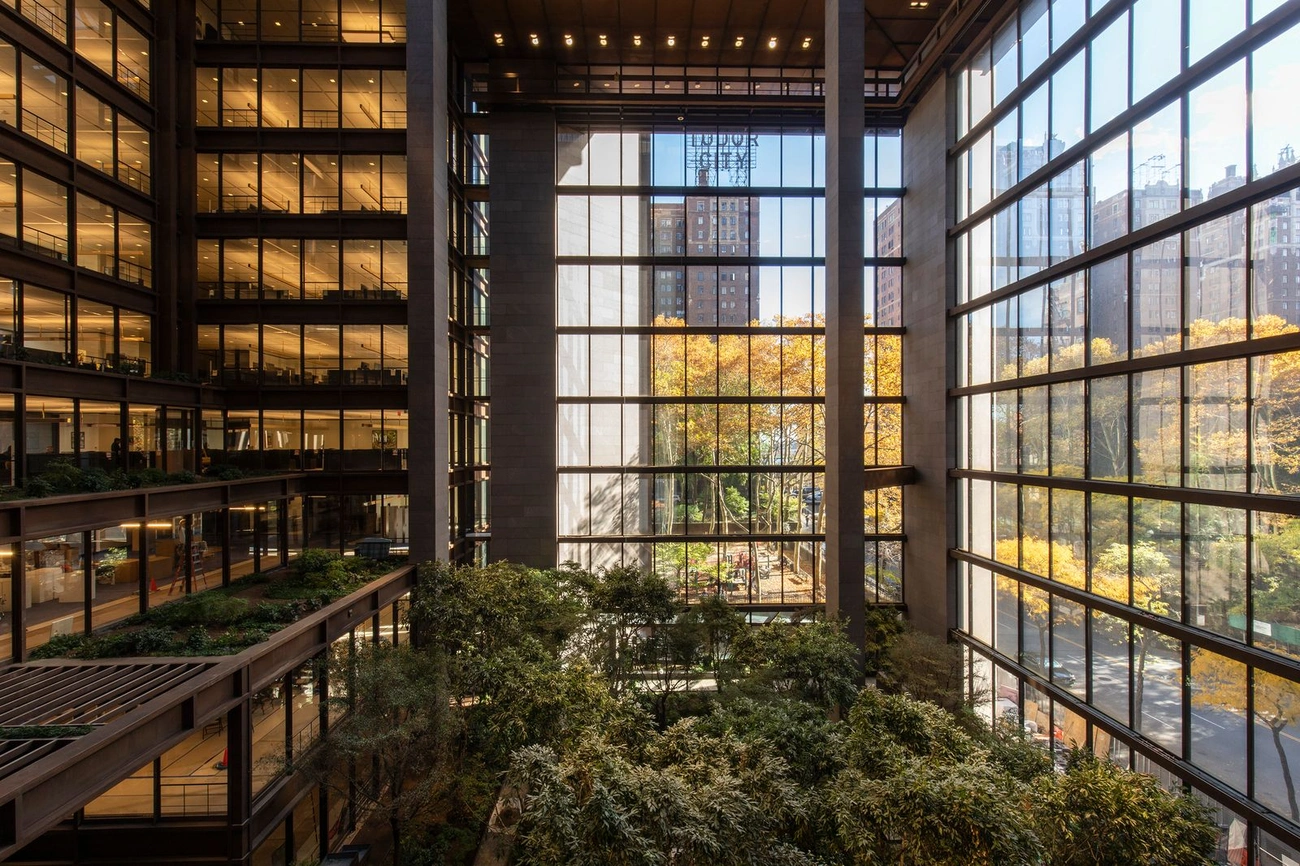
Indeed, the impact of Kevin Roche’s architecture extends far beyond esthetics. As an Irish-born American architect, Roche was responsible for designing and master planning over 200 built projects both in the United States and internationally. His portfolio includes 38 corporate headquarters, 8 museums, 7 research facilities, and numerous buildings for six universities. Particularly notable among kevin roche buildings are the elegant Ford Foundation headquarters in Manhattan—a dark metal and glass palazzo built around a garden atrium and completed in 1967—and the innovative Oakland Museum of California, where the terraced roof functions as a public park.
Throughout this article, we’ll explore the secret philosophy that guided Kevin Roche’s architectural approach and how it transformed not just skylines, but how we think about the relationship between buildings, people, and the environment.
Early Life and the Spark of Architecture
Early Life and the Spark of Architecture
Growing up in post-civil war Ireland
Eamonn Kevin Roche entered the world on June 14, 1922, at 25 Lower Camden Street in Dublin, born above his aunt’s shop during one of Ireland’s most turbulent periods. His birth occurred while his father was serving his second jail sentence for revolutionary activities during the Irish Civil War. As the youngest of three sons to Alice (Harding) and Eamon Roche, Kevin’s earliest years were shaped by the political turmoil that defined Ireland’s struggle for independence.
Following his father’s release from imprisonment, the family relocated to the pastoral town of Mitchelstown in County Cork. Here, away from war-torn Dublin, the young Kevin would experience a childhood far removed from the urban conflicts that marked his birth.
The influence of his father and rural life
Eamon Roche proved to be a remarkable influence on his son’s development. After settling in Mitchelstown, he worked as a creamery manager and successfully united surrounding dairy co-operatives to form the largest co-op in southwestern Ireland. Under his leadership, the Galtee Cheese Company (later acquired by KerryGold) flourished.
During summer breaks from school, Kevin worked alongside his father, learning practical skills. “I learned how to lay bricks, how to weld, then gradually got to be in charge of a group of workmen,” he later recalled. This hands-on experience culminated in a life-changing opportunity when, at just 19 years old and in his first year of architectural studies, his father commissioned him to design a piggery for the dairy farm.
“I designed it. And supervised the building of it,” Kevin later reminisced about this formative experience. The project taught him valuable lessons—including one about structural integrity when a wall collapsed because he instructed the masons to build it too high before the concrete had set.
Discovering architecture through John Ruskin
While attending Rockwell College in County Tipperary, Kevin was admittedly not an exceptional student. However, a chance encounter with John Ruskin’s “The Seven Lamps of Architecture” in the school library sparked his interest in architecture. Although he later recalled that the book “was not the easiest to read but was very interesting”, this discovery set him on his professional path.
Subsequently, Kevin enrolled at University College Dublin to study architecture, where he was among just ten students in the program. This education, though rooted in classical design principles, laid the foundation for what would eventually become a revolutionary career in modern architecture.
From Student to Saarinen’s Right Hand
Education at University College Dublin and IIT
After his initial architectural studies at University College Dublin, Kevin Roche’s academic journey took a significant turn as he ventured to America. In 1948, he arrived in the United States to study under the renowned architect Ludwig Mies van der Rohe at the Illinois Institute of Technology (IIT) in Chicago. This transition marked a pivotal moment in his development as an architect, exposing him to modernist principles that would influence his future designs.
At IIT, Roche immersed himself in the Miesian approach to architecture—characterized by clean lines, minimal ornamentation, and the honest expression of materials. Nevertheless, rather than becoming a mere disciple of Mies, he began developing his own architectural voice, one that would ultimately transcend pure modernism.
Joining Eero Saarinen’s firm
Upon completing his studies, Roche briefly worked for the United Nations planning staff in New York before joining Eero Saarinen’s architectural practice in 1950. This decision proved transformative for his career. The Finnish-American Saarinen, already known for his innovative and expressive designs, recognized Roche’s exceptional talent and analytical mind.
Throughout the 1950s, Roche steadily gained Saarinen’s trust, contributing to groundbreaking projects such as the TWA Terminal at JFK Airport and the Gateway Arch in St. Louis. His methodical approach complemented Saarinen’s more intuitive style, creating a powerful creative partnership.
Becoming principal designer and completing Saarinen’s legacy
As a result of his growing expertise and dedication, Roche advanced to become Saarinen’s principal design associate. Moreover, when Eero Saarinen died unexpectedly in 1961, Roche—along with colleague John Dinkeloo—was entrusted with completing Saarinen’s unfinished projects.
This enormous responsibility included overseeing the completion of iconic structures like the CBS Headquarters in New York, the John Deere Headquarters in Illinois, and Dulles International Airport near Washington, D.C. Their successful execution of these projects established Roche’s reputation as an architect capable of handling complex, large-scale commissions with both technical precision and artistic vision.
The Rise of KRJDA and Roche’s Signature Works

Image Source: ArchDaily
The Rise of KRJDA and Roche’s Signature Works
Founding Kevin Roche John Dinkeloo and Associates
Upon completing Saarinen’s unfinished projects, Roche and Dinkeloo established their own firm in 1966. Their partnership combined Roche’s design vision with Dinkeloo’s technical expertise, creating a powerhouse that would reshape American architecture for decades to come.
The Oakland Museum and the idea of architecture as landscape
The Oakland Museum of California (1969) exemplified Roche’s revolutionary thinking. Instead of imposing a structure on the landscape, he designed terraced gardens that merged building and terrain. This groundbreaking approach made architecture an extension of the environment rather than separate from it.
Kevin Roche Ford Foundation: redefining corporate space
With the Ford Foundation headquarters (1968), Roche transformed office design by placing a glass-enclosed garden atrium at the building’s core. This innovative concept prioritized human experience over corporate efficiency, creating spaces where employees could connect with nature amid urban surroundings.
Metropolitan Museum of Art: a 40-year transformation
Perhaps Roche’s most enduring relationship was with the Metropolitan Museum of Art. Between 1967-2007, he designed numerous expansions and renovations, yet carefully maintained the museum’s character throughout these interventions.
Global projects and urban planning
Beyond America, Roche designed significant buildings worldwide, from Japan’s Shiodome City Center to Spain’s Santander headquarters. Throughout these diverse projects, his philosophy remained consistent—architecture should first serve people, not simply make grand statements.
Read other Articles – 23 Types of English Spoken Around the World in 2026 [With Examples]
The Philosophy Behind the Form
The Philosophy Behind the Form
Architecture as both local and universal
At the core of Kevin Roche’s design philosophy was his belief that “the responsibility of the modern architect is to create a community for a modern society“. Unlike architects who prioritized visual flair, Roche approached each project with meticulous attention to context, simultaneously embracing local needs and universal human principles.
Designing for people, not trends
“Ego is dangerous in architecture,” Roche once stated firmly. “It’s not the point of what we’re doing. We’re trying to create civilization”. This fundamentally people-centered approach led him to pioneer research methods that included systematically interviewing employees before designing corporate headquarters. His buildings resist stylistic classification because he rejected rigid categories in favor of responding to human needs.
Environmental integration and green spaces
Throughout his career, Roche emphasized the importance of bringing nature into buildings for people’s well-being. The atrium garden in the Ford Foundation Headquarters demonstrated that workplaces could promote community health, establishing new paradigms that influenced architects worldwide.
Systematic yet human-centered design
Essentially, Roche’s greatness came from balancing analytical precision with deep humanism. When awarded the Pritzker Prize in 1982, the jury praised him as an architect who “persists in being an individual” who “sometimes intersects fashion, sometimes lags fashion, and more often makes fashion”. His approach balanced “the clear abstract and geometrical legacy of modern architecture with subtle, human-focused planning and detailing”.
Conclusion
Kevin Roche’s architectural legacy goes beyond the buildings themselves, reflecting a deep understanding of how spaces influence human experience. Over his remarkable six-decade career, Roche consistently placed people at the heart of his design process, choosing to prioritize human needs over personal ego. This approach set him apart from many of his contemporaries who were more focused on chasing architectural trends.
What made Roche exceptional was his ability to reconcile seemingly opposing forces. He blended analytical precision with humanistic values, environmental sensitivity with urban pragmatism, and local context with universal principles. The Ford Foundation headquarters stands as the clearest example of this philosophy—a building that transformed corporate architecture by prioritizing human well-being through its garden atrium.
As a result, Roche’s work remains relevant, even in the face of changing architectural trends. His buildings continue to serve their purpose beautifully decades after completion because they cater to fundamental human needs rather than fleeting stylistic preferences. The Oakland Museum remains both a cultural institution and a public park, while his numerous additions to the Metropolitan Museum of Art integrate seamlessly with the original structure.
Roche’s career offers a powerful lesson for today’s architects: success doesn’t stem from imposing a signature style across every project but from carefully listening to each site, client, and community. His methodical approach—extensive research, user interviews, and consideration of environmental impacts—led to buildings that genuinely served their intended purpose.
Though Kevin Roche passed away in 2019 at age 96, his design philosophy lives on in both his completed works and his influence on generations of architects. His legacy reminds us that great architecture balances art and science, form and function, vision and practicality. The “secret” to Roche’s mastery wasn’t really a secret at all—it was simply his unwavering commitment to creating spaces that improve human life.
FAQs
Q1. What was Kevin Roche’s core architectural philosophy? Kevin Roche’s philosophy centered on creating spaces that serve people and communities. He believed in designing buildings that respond to human needs, integrate with the environment, and balance local context with universal principles.
Q2. How did Kevin Roche approach corporate architecture differently? Roche revolutionized corporate architecture by prioritizing human well-being. He introduced innovative concepts like the garden atrium in the Ford Foundation headquarters, bringing nature into the workplace to enhance employee experience and promote community health.
Q3. What role did sustainability play in Kevin Roche’s designs? Roche emphasized environmental integration and green spaces long before it became trendy. He believed in bringing nature into buildings for people’s well-being, as demonstrated in projects like the Oakland Museum, where the building seamlessly blends with the landscape.
Q4. How did Kevin Roche balance creativity with functionality in his designs? Roche combined analytical precision with deep humanism in his approach. He conducted extensive research, including interviewing users, to create buildings that were both esthetically pleasing and highly functional, resisting stylistic classification in favor of responding to specific needs.
Q5. What is Kevin Roche’s most significant contribution to modern architecture? Roche’s most significant contribution was his people-centered approach to architecture. He pioneered the idea that buildings should serve their users and communities rather than simply make grand statements, influencing generations of architects to prioritize human experience in their designs.
Interested in similar content or opportunities. Contact Us