

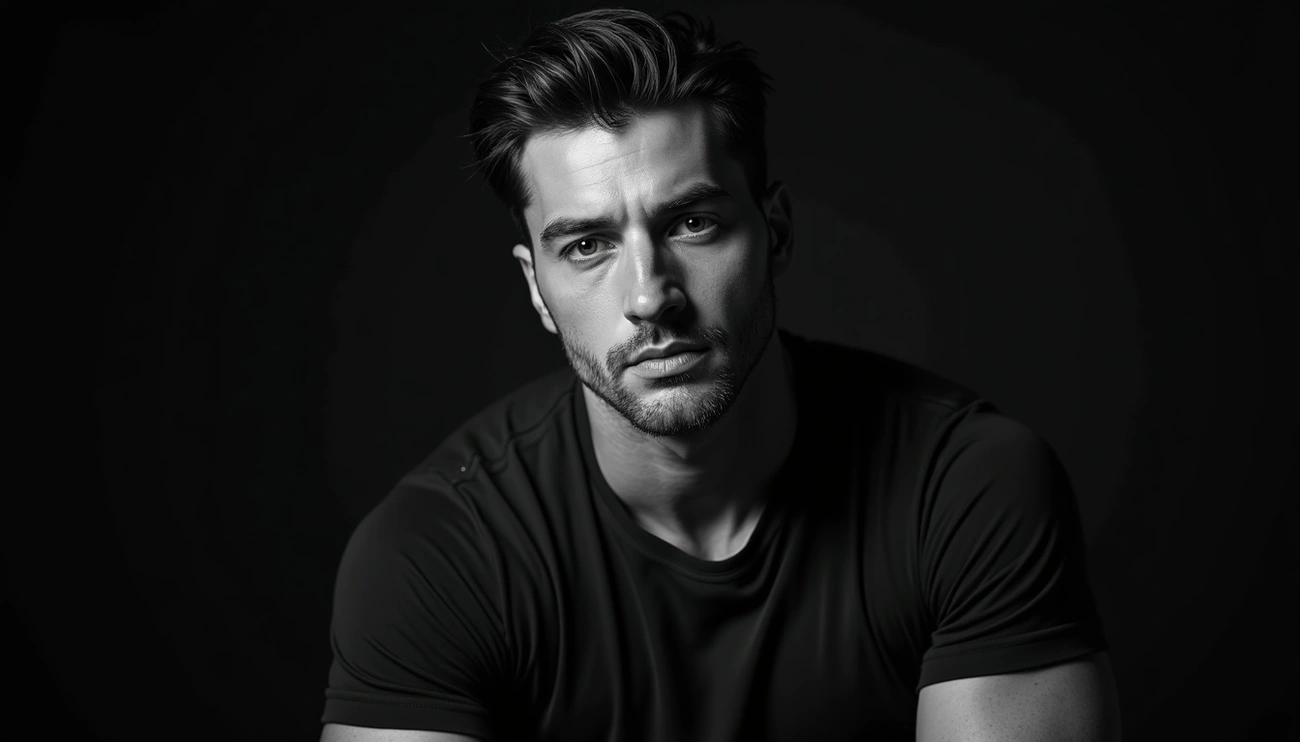
Ernest Khalimov catapulted to internet fame not through a traditional career, but as the face of one of the most iconic memes in digital history. Born on March 1, 1969, the Russian bodybuilder and model became the embodiment of masculine ideals when his striking black-and-white photos went viral as “GigaChad.” By the summer of 2022, his online presence had generated a staggering 600,000 monthly Google searches, making him one of the most popular memes ever.
What started in the unexpected corners of 4chan soon turned into a global phenomenon. After a hiking photo went viral in 2017, Khalimov gained over 850,000 Instagram followers and eventually turned his fame into financial success by launching 140 NFTs, with one image selling for around $36,000. Despite this immense popularity, speculation about whether Ernest Khalimov is real or a digital creation continues to swirl. In this article, we’ll delve into the untold story behind the man with the “inhuman musculature and perfect jawline” who earned the title of GigaChad and explore how a series of stylized photos became a cultural touchstone.
The Rise of GigaChad: Meme Origins and Internet Fame
The birth of an internet icon rarely happens overnight. The journey of Ernest Khalimov from obscure model to cultural phenomenon began in October 2017, marking the start of what would become one of the internet’s most recognizable masculine archetypes.
The first viral photo and 4chan post
On October 15, 2017, an anonymous Redditor shared a link to the @sleekntears Instagram page in the /r/bodybuilding subreddit. The post showcased striking images from photographer Krista Sudmalis’ art project “Sleek’N’Tears,” featuring Khalimov’s impossibly chiseled physique. Within hours, the post garnered over 495 points and 100 comments, with users expressing disbelief: “How am I the same species as this guy?” and “I was 100% sure it was CGI until I entered his IG account”.
The following day, Khalimov’s image appeared on 4chan’s /pol/ board, where it received its now-famous moniker. This marked the beginning of the meme’s spread across bodybuilding forums, incel communities, and various subreddits.
The ‘Chad’ archetype and meme culture
In internet slang, “Chad” represents an attractive, successful male archetype – the opposite of “incel” or “beta male”. Often depicted in memes, the term is sometimes used interchangeably with “slayer” and represents a hypermasculine ideal of confidence and physical attractiveness.
The Khalimov images perfectly embodied this concept, presenting an exaggerated version of masculine traits that seemed almost too perfect to be real. His photographs featured an impossibly chiseled jawline, towering height, and impeccable physique – characteristics that made him the ultimate representation of the Chad archetype.
How the name ‘GigaChad’ was born
The term “GigaChad” first appeared in that fateful October 16, 2017 4chan post, which described Khalimov as “the Gigachad. The perfect human specimen destined to lead us against the reptilians”. The name combines “giga” (meaning extremely large or impressive) with “Chad”, creating a term that indicates someone who has achieved the Chad persona to the highest degree.
The GigaChad phenomenon exploded in February 2021 when Khalimov’s images were featured in the “Average Fan vs. Average Enjoyer” meme format. A video using this format, featuring the song “Can You Feel My Heart” by Bring Me The Horizon, garnered over 190,000 YouTube views in just one month. By summer 2022, “GigaChad” was generating an astounding 600,000 monthly Google searches.
Who Is Ernest Khalimov? The Man Behind the Meme
Behind the chiseled features of the internet’s most iconic male archetype stands a mysterious figure. The identity of Ernest Khalimov remains partially shrouded in uncertainty, creating a fascinating dichotomy between digital fame and personal obscurity.
Ernest Khalimov real face and background
According to various sources, Ernest Khalimov was born on March 1, 1969, in Moscow, Russia. This would make him in his early 50s, though his age-defying appearance makes it difficult to confirm. Standing at approximately 197 centimeters (6’5″), his towering height adds to his mythical status.
Khalimov operates an Instagram account under the handle “@berlin.1969,” where he occasionally shares both professional and unedited photos of himself. In a rare personal statement on Instagram, he acknowledged his meme status: “I don’t have Twitter, Facebook or anything else. I like the memes you make. I don’t know much about it, but yes, I’m just like you, maybe a little bigger”.
Modeling career and Sleek’n’Tears project
Khalimov’s prominence emerged through his work with Russian photographer Krista Sudmalis for her “Sleek’N’Tears” project. This artistic endeavor, focusing on athletic male and female physiques, became the foundation for his internet fame.
While working as both a fitness trainer and model, Khalimov became one of five main models featured in Sudmalis’ distinctive black-and-white photography. His earliest modeling photos date back to 2015, though they only gained viral attention in 2017.
Krista Sudmalis and the digital art theory
The most intriguing aspect of the GigaChad phenomenon centers on authenticity. Many internet users question whether Khalimov exists as depicted or is primarily a digital creation. Sudmalis’ artistic style involves heavy stylization—her subjects are photographed against gray backgrounds, wearing minimal clothing to emphasize their physiques.
Some theorists suggest Khalimov’s images are heavily manipulated versions of Sudmalis’ boyfriend, Artur Farad. Additionally, the lack of behind-the-scenes videos featuring Khalimov raises further questions. Nevertheless, Sudmalis herself acknowledges working on a book about Khalimov “in his own words,” suggesting a genuine person exists behind the iconic images.
Is Ernest Khalimov Real or Just a Digital Illusion?
The question that consistently follows Ernest Khalimov’s internet fame is fundamental: does the man behind GigaChad actually exist? This controversy divides internet communities, with compelling evidence on both sides of the debate.
Evidence supporting his existence
Several indicators suggest Ernest Khalimov is indeed real. His Instagram account @berlin.1969 occasionally acknowledges his meme status, with a humble post thanking fans for their positive reception. In it, he wrote: “I have nothing to say to you, probably because I look much more interesting from your words.” Some social media users claim to have seen photos of Khalimov with his brothers, all sharing similar distinctive jawlines. Furthermore, comedian Count Dankula shared an image allegedly showing Khalimov with siblings, captioned: “For the longest time, I thought GigaChad meme was CGI… but it’s actually a real dude.”
Arguments for digital manipulation
Conversely, many believe GigaChad is primarily a digital creation. His impossibly perfect physique, chiseled jawline, and ideal proportions appear too flawless to be authentic. Krista Sudmalis, the photographer behind the Sleek’N’Tears project, offers cryptic responses about his reality, stating: “Ernest is as real as it can be, given the circumstances he is in.” Notably, unlike other models in Sudmalis’ portfolio, no behind-the-scenes footage of Khalimov exists. Some theorists suggest Artur Farad, a fitness model based in Dubai who has posted images with the Sleek’N’Tears brand stamp, might be the actual inspiration or base for the GigaChad images.
The role of Instagram and online presence
Ernest’s limited social media activity fuels speculation about his authenticity. His Instagram account features only 18 photos posted over five years, creating an air of mystery. Unlike most internet celebrities, he doesn’t maintain Twitter or Facebook accounts. This minimal digital footprint makes verifying his existence challenging. When acknowledging his meme status on Instagram, he positioned himself as an “average person,” a stark contrast to his extraordinary appearance in the viral images.
Debunking the ‘ernest khalimov death’ rumors
In April 2021, rumors circulated that Khalimov had died in a car accident. This hoax spread rapidly across platforms like Discord, causing genuine concern among fans. Upon investigation, no credible news sources confirmed the accident, nor was there any mention on the official Sleek’N’Tears accounts. The death rumor, like much surrounding GigaChad, illustrates how digital mythology forms around enigmatic internet figures whose reality remains deliberately ambiguous.
The Cultural Impact of GigaChad
Few internet memes have penetrated mainstream culture as profoundly as GigaChad. What began as an exaggerated representation of masculinity has evolved into a multifaceted cultural touchstone that spans various digital and real-world domains.
GigaChad in meme formats and social media
In 2021, a smiling version of Ernest Khalimov’s iconic image was incorporated into the popular “Average Fan vs. Average Enjoyer” meme format, garnering over half a million views. Another variation shows GigaChad reacting to country names as if they weren’t countries at all but other nouns or adjectives. Interestingly, GigaChad has taken on multiple meanings across communities – sometimes representing an ultimate alpha who can never be wrong, other times portraying a more relaxed figure who values confidence over perfection, and occasionally symbolizing positive self-trust.
NFTs and monetization of the persona
The commercial potential of the GigaChad phenomenon has not gone unnoticed. A collection of 122 photos taken by Krista Sudmalis for her Sleek’N’Tears project, including images of Ernest Khalimov, was released as NFTs. The team behind the images marketed these as “not just a meme collection” but as unique artworks that have “become a part of modern internet culture”. Moreover, a Solana blockchain-based memecoin named “Gigachad” (GIGA) emerged, positioning itself as a community-focused cryptocurrency that promotes self-improvement and discipline.
How GigaChad influenced body image and masculinity
Remarkably, a survey by DatePsychology.com revealed a significant gender divide in GigaChad perception – women rated the images as “below average” (3.58/7.0) whereas men rated them notably higher (4.88/7.0). This disconnect highlights how the meme has influenced perceptions of masculine ideals. In fitness communities, GigaChad is often humorously cited as the “ultimate goal” despite his unrealistic nature. The meme has subsequently sparked serious discussions about toxic masculinity and the pressure on men to conform to stereotypical ideals.
The legacy of the GigaChad phenomenon
Beyond entertainment, GigaChad has become a versatile symbol in digital communication. Through various formats – memes, GIFs, or social media posts – incorporating GigaChad conveys a spectrum of emotions from admiration to irony. The phenomenon has prompted reevaluation of traditional notions of masculinity and the impact of media on self-perception. As an ongoing cultural reference point, GigaChad continues to provide insights into societal perceptions of success, attractiveness, and gender roles while stimulating conversation about the ideals aspired to in modern society.
Conclusion
Ernest Khalimov’s journey from obscure model to internet legend stands as one of the most fascinating digital transformations of our time. Though questions about his authenticity persist, the cultural significance of GigaChad transcends the debate of whether he exists exactly as depicted. Undoubtedly, his image has sparked meaningful conversations about masculine ideals and body image expectations across various communities worldwide.
Perhaps most tellingly, the stark contrast between how men and women perceive the GigaChad esthetic reveals much about gendered expectations in our society. Men generally rate these images significantly higher than women do, highlighting the disconnect between perceived and actual attractiveness standards.
The GigaChad phenomenon also demonstrates how internet fame can transform into tangible value. From NFT collections selling for thousands of dollars to cryptocurrency ventures bearing his name, Khalimov’s likeness has generated substantial commercial opportunities regardless of the reality behind the images.
Beyond entertainment, this meme has evolved into a versatile symbol that communicates complex emotions and attitudes with a single image. Whether used ironically or aspirationally, GigaChad represents something different to each person who encounters it.
Throughout this extraordinary rise to fame, Khalimov himself has remained remarkably humble, acknowledging his meme status while maintaining limited public presence. His restraint adds another layer of intrigue to a digital personality that continues to fascinate internet users worldwide.
The story of Ernest Khalimov reminds us how thin the line between digital fiction and reality has become. Actually, whether entirely real, heavily edited, or somewhere in between, GigaChad has secured his place in internet history – a testament to how profoundly online culture shapes our perceptions, discussions, and ideals about masculinity in the modern world.
FAQs
Q1. Is Ernest Khalimov, the GigaChad, a real person? Ernest Khalimov is indeed a real person. He’s a Russian fitness model whose photos went viral online, becoming the basis for the GigaChad meme. However, the images that made him famous are heavily stylized and edited.
Q2. Are the viral GigaChad photos genuine or manipulated? The viral GigaChad photos are based on real images of Ernest Khalimov but are heavily edited and stylized. They were part of photographer Krista Sudmalis’ “Sleek’N’Tears” project, which involved significant digital manipulation to create an exaggerated masculine ideal.
Q3. How did Ernest Khalimov become known as GigaChad? Khalimov’s images first went viral in 2017 when they were shared on bodybuilding forums and 4chan. The term “GigaChad” was coined to describe his impossibly perfect physique and facial features, combining “giga” (meaning extremely large) with “Chad” (internet slang for an attractive, successful male).
Q4. What impact has the GigaChad meme had on perceptions of masculinity? The GigaChad meme has sparked discussions about masculine ideals and body image expectations. It has influenced perceptions in fitness communities and prompted conversations about toxic masculinity and the pressure on men to conform to stereotypical ideals.
Q5. Has Ernest Khalimov capitalized on his GigaChad fame? Yes, to some extent. A collection of 122 photos from the Sleek’N’Tears project, including images of Khalimov, was released as NFTs. Additionally, a blockchain-based memecoin named “Gigachad” (GIGA) emerged, though Khalimov’s direct involvement in these ventures is unclear.
People also read: WEBTOON Offers Free Xbox Game Pass in Surprise Gaming Deal