

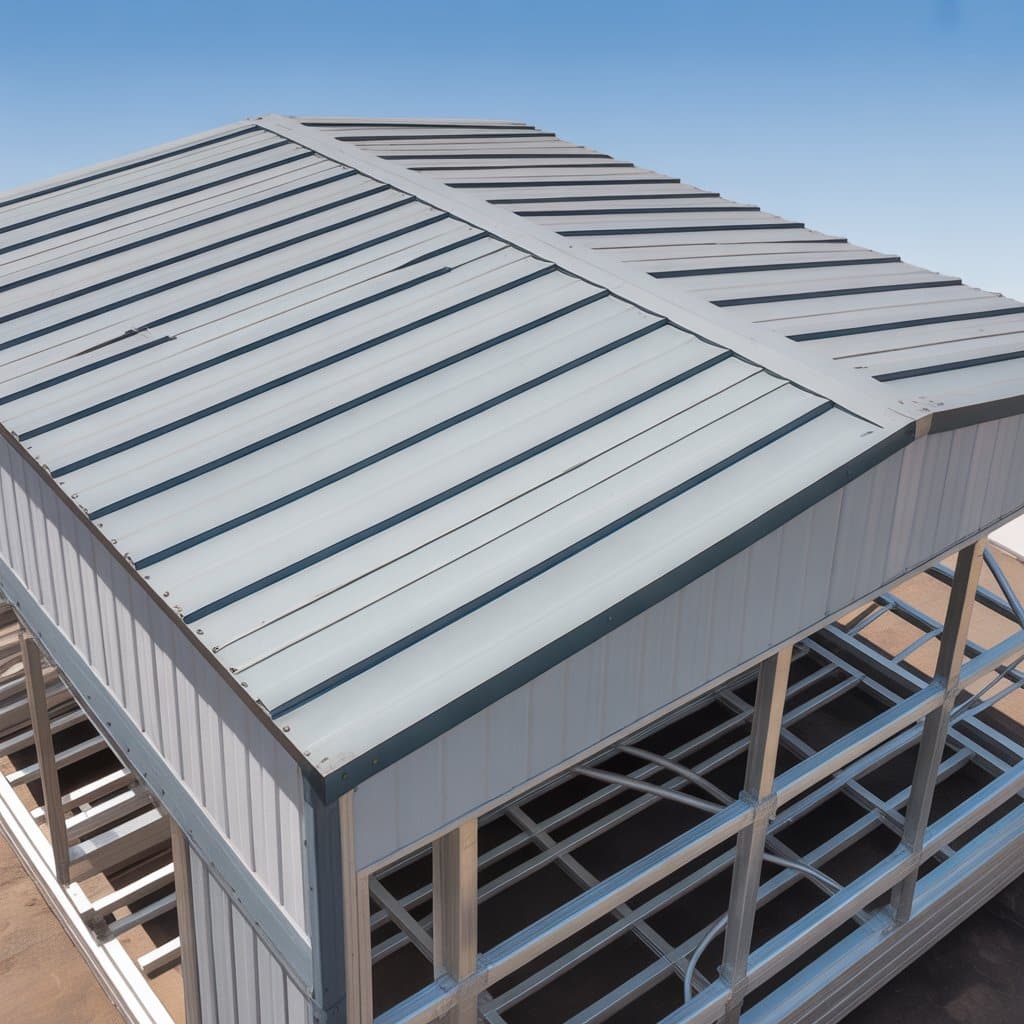
What is mobile home roof pitch?
Mobile home roof pitch represents the measurement of a roof’s steepness, calculated as the vertical rise in inches per 12 inches of horizontal run. A 3.5/12 pitch indicates 3.5 inches of rise for every 12 inches of run, while a 5/12 pitch measures 5 inches of rise per 12 inches of run. This ratio-based measurement system provides a standardized method for describing roof angles across manufactured housing.
The pitch varies based on the home configuration, with single-wide, double-wide, and modular homes each exhibiting different standard measurements. Single-wide homes typically feature roofs under a 3.5/12 pitch, often considered nearly flat structures. These low-pitched roofs, particularly those measuring 2.5 to 3.0/12 pitch, tend to require higher maintenance and experience more frequent roof damage. Many single-wide builders now construct 3.5/12 pitched roofs with asphalt shingles and dormers to address these limitations.
Medium-pitched roofs range from 3.5/12 to 7/12 pitch and appear more commonly on manufactured HUD Code or IRC Modular Homes. Many manufactured homes arrive with a 3/12 roof pitch, though upgrades to 4/12, 5/12, or greater remain available. Pitches of 5/12 and higher typically occur only on modular homes with hinged roofs, allowing transportation within height restrictions. These steeper configurations provide attic space for storage in modular applications, though HUD code restrictions prevent homeowners from flooring attics at the manufacturing plant.
The terminology distinction matters: pitch differs from slope, though both terms face frequent interchangeable use. Pitch historically referred to the ratio between ridge height and building span, while slope provides more specific measurement data. Areas with heavy snowfall sometimes require minimum 4/12 pitch specifications from insurers.
Standard mobile home roof pitch measurements
Manufactured home builders establish specific pitch standards based on construction requirements and transportation limitations. The industry baseline remains at 3/12 for many manufactured homes, though upgrades to 4/12, 5/12, or greater pitches exist as available options. Modern manufacturers now offer roof pitches ranging from 5-in-12 to 12-in-12, often incorporating multiple roof lines to enhance architectural appeal. Modular homes frequently carry a 5/12 roof pitch as their standard configuration.
Typical mobile home roof pitch ranges
Standard manufactured housing measurements fall into distinct categories based on steepness. Low-pitched configurations measure below 3.5/12, while medium-pitched roofs span from 3.5/12 to 7/12 pitch. Builders construct higher pitched roofs at 6/12 or 7/12 measurements, particularly for premium manufactured homes. Pitches measuring 5/12 and greater typically appear only on modular homes equipped with hinged roofs, facilitating compliance with transportation height limits. These hinged systems raise at the home site, with roof caps then placed at the crown.
Single wide mobile home roof pitch specifications
Single-wide structures maintain roof pitches under 3.5/12, with common measurements ranging from 2.5 to 3.0/12 pitch. Current construction trends show manufacturers producing 3.5/12 pitched roofs with asphalt shingles and dormers to address maintenance concerns. Premium single-wide models feature higher pitched roofs, taller side walls, dormers, and extended dimensions of 16×80 or 18×80 configurations.
Double wide mobile home roof pitch specifications
Double-wide manufactured homes utilize similar pitch standards as modular constructions, with specifications varying based on manufacturer and model selection. Roofs measuring 5/12 and upward provide attic space for storage purposes in modular applications. Buildings featuring 9-foot interior walls typically maintain roof pitches not exceeding 5/12 to preserve proportional esthetics.
How to determine roof pitch on 14 x 70 mobile homes
Accurate measurement procedures determine roof pitch specifications for 14 x 70 mobile home configurations through systematic assessment of vertical rise against horizontal run.
Measure the roof run and rise
The attic measurement method provides the safest approach for obtaining pitch data. A carpenter’s level, measuring 12 inches or longer, requires a pencil mark placed at the 12-inch point along its bottom edge. The level positions against a roof rafter’s bottom edge while maintaining horizontal alignment, verified through the bubble indicator. The tape measure extends from the 12-inch mark vertically downward to the rafter’s bottom edge, establishing the rise measurement. Alternatively, measurements occur from exterior positions by holding the level horizontally near the roof edge and measuring downward from the 12-inch mark to the roof surface.
Calculate the pitch ratio
The pitch ratio derives from the rise measurement divided by the standard 12-inch run. A 4-inch rise measurement corresponds to a 4:12 pitch ratio. This calculation expresses roof steepness as inches of vertical rise per 12 inches of horizontal distance.
Verify measurements for accuracy
Multiple measurements across different roof sections confirm consistency, particularly on structures with varying pitch values. Digital pitch finders provide real-time verification against manual calculations.
Tools needed for measuring roof pitch
Essential equipment includes a carpenter’s level exceeding 12 inches in length, a tape measure, and a pencil for marking measurement points. Digital pitch gages and smartphone applications with inclinometer capabilities offer alternative measurement technologies.
FAQs
Q1. What is the typical roof pitch range for manufactured homes? Most manufactured homes have a roof pitch between 3/12 and 5/12, with 3/12 being the industry baseline. Single-wide homes typically feature pitches under 3.5/12, while modular homes often have a standard 5/12 pitch. Premium models may include higher pitches ranging from 5-in-12 to 12-in-12 for enhanced architectural appeal.
Q2. How do I measure the roof pitch from inside the attic? Place a 12-inch carpenter’s level horizontally against the bottom edge of a roof rafter, ensuring the bubble shows it’s level. Mark the 12-inch point on the level, then use a tape measure to measure vertically from that mark down to the rafter’s bottom edge. This vertical measurement represents your rise, which creates your pitch ratio when paired with the 12-inch run.
Q3. What tools do I need to measure mobile home roof pitch? You’ll need a carpenter’s level that’s at least 12 inches long, a tape measure, and a pencil for marking measurement points. Alternatively, you can use digital pitch gages or smartphone applications with inclinometer capabilities for more convenient measurements.
Q4. How do I calculate the pitch ratio after taking measurements? Divide the rise measurement by the standard 12-inch run to determine your pitch ratio. For example, if you measure a 4-inch vertical rise, your roof has a 4:12 pitch ratio. This expresses the roof steepness as inches of vertical rise per 12 inches of horizontal distance.
Q5. How much does it cost to install a metal roof on a 14 x 70 mobile home? Installing a metal roof on a double-wide mobile home typically costs between $5,000 and $32,000, with most homeowners spending around $12,000 to $18,000 for complete installation. The actual cost varies based on your location, the materials you choose, and your home’s specific requirements.
People also read: How to Send Robux With Less Tax Loss (Legit Ways Only)