

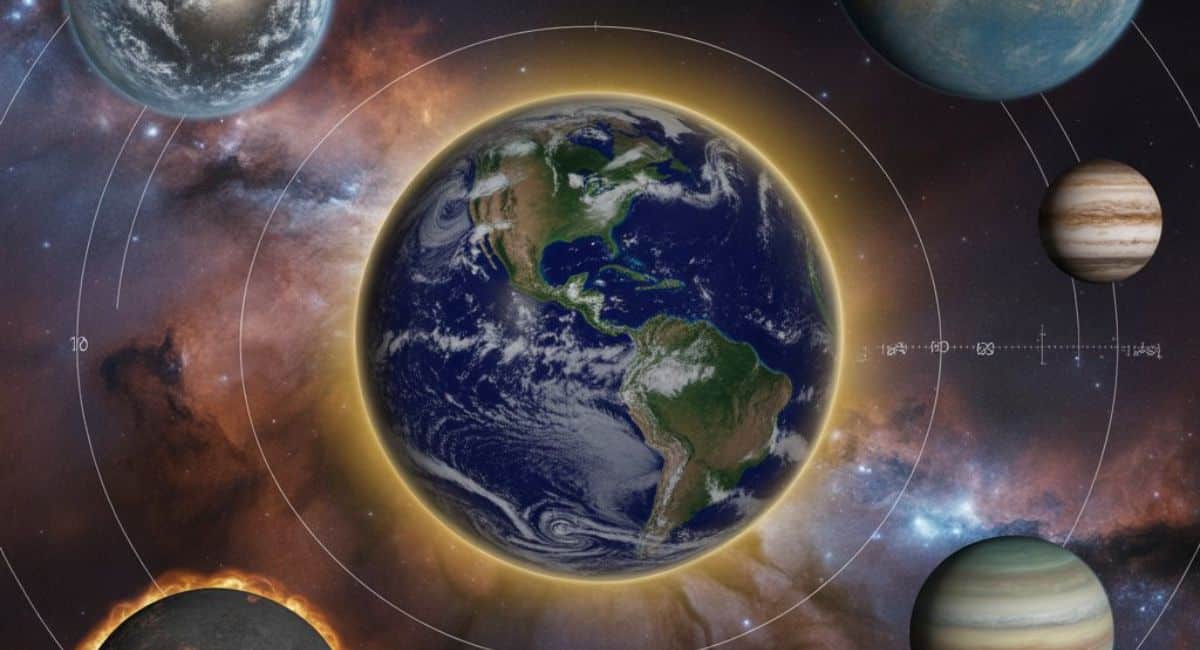
The search for life beyond Earth is one of the most profound and abiding quests in the story of humanity. The idea that other Earthlike planets might exist, housing their own life, has captured the imagination of scientists, astronomers, and thinkers for centuries. In a way, the rapid progress of technology and the deepening understanding of the universe have led us to discover that Earth may not be so singular after all. This makes the concept of planetary habitability central to the search for life-a concept that seeks to tell us what makes a planet capable of supporting life. What does it mean for a planet to be habitable? Is the general condition of a planet being habitable simply due to water, oxygen, and sunlight, or is there another set of conditions under which we consider a planet habitable?
In this article, we’ll discuss the different factors that make a planet capable of sustaining life, how scientists search for planets similar to Earth, and what deeper implications might come with discovering life elsewhere in the universe.
What is planetary habitability?
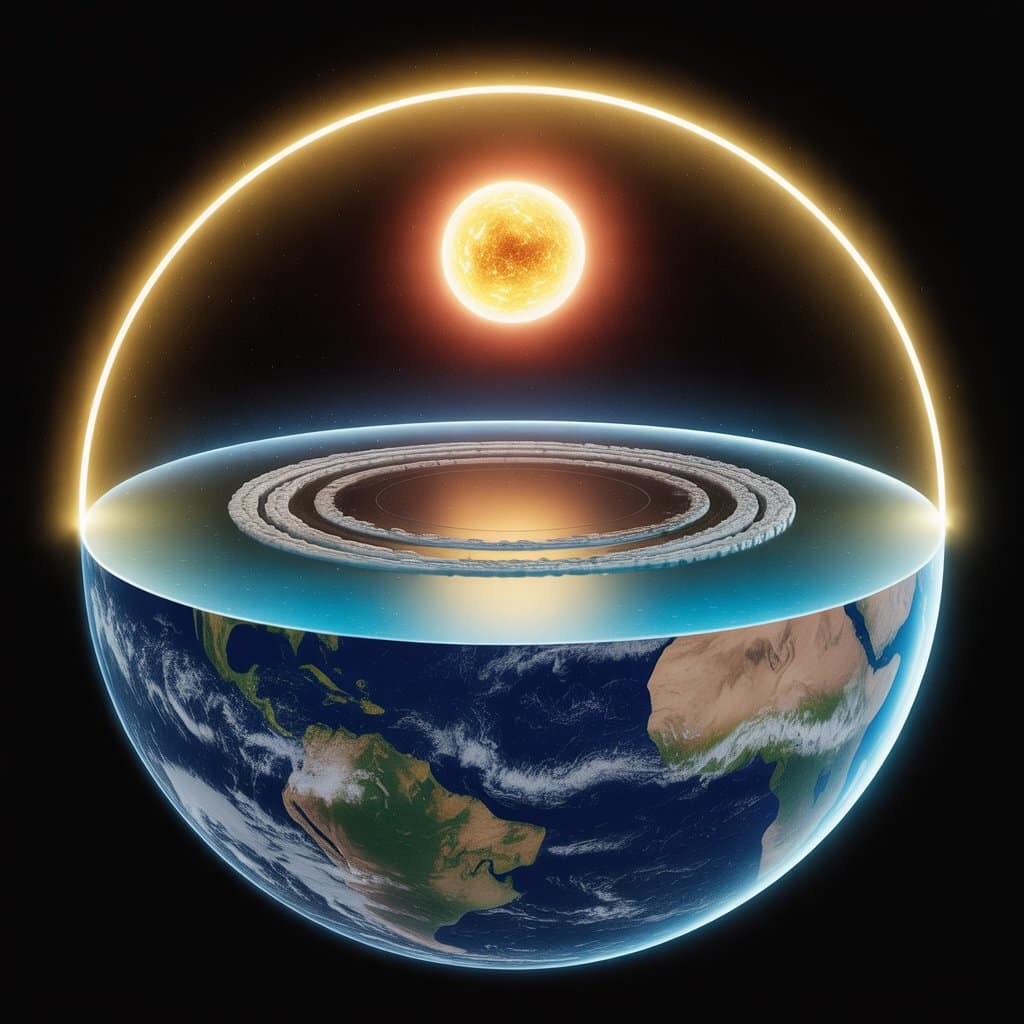
In its entirety, planetary habitability is the potential for life to exist on a planet. This mere statement encompasses a lot more complexity than it lets on. It is not a question of whether a planet can host life, but whether it can support life as we know it-life that is premised on certain conditions like liquid water, a stable atmosphere, and a habitable climate.
In modern astronomy, a planet is said to be habitable if it has several basic ingredients that can make it support life. While liquid water has often been regarded as the most essential ingredient, the atmosphere of the planet itself, its chemical composition, and what energy is being received from its star are also important.
The search for Earth-like planets-those with conditions like our own-is both an exhilarating and daunting scientific challenge. For years, scientists concentrated on the discovery of those planets that could lie within the so-called “habitable zone” of their star, the place where liquid water might exist. But this is just one piece of the puzzle. Let’s delve a little deeper into what actually makes a planet habitable.
The Habitable Zone – The Goldilocks Zone
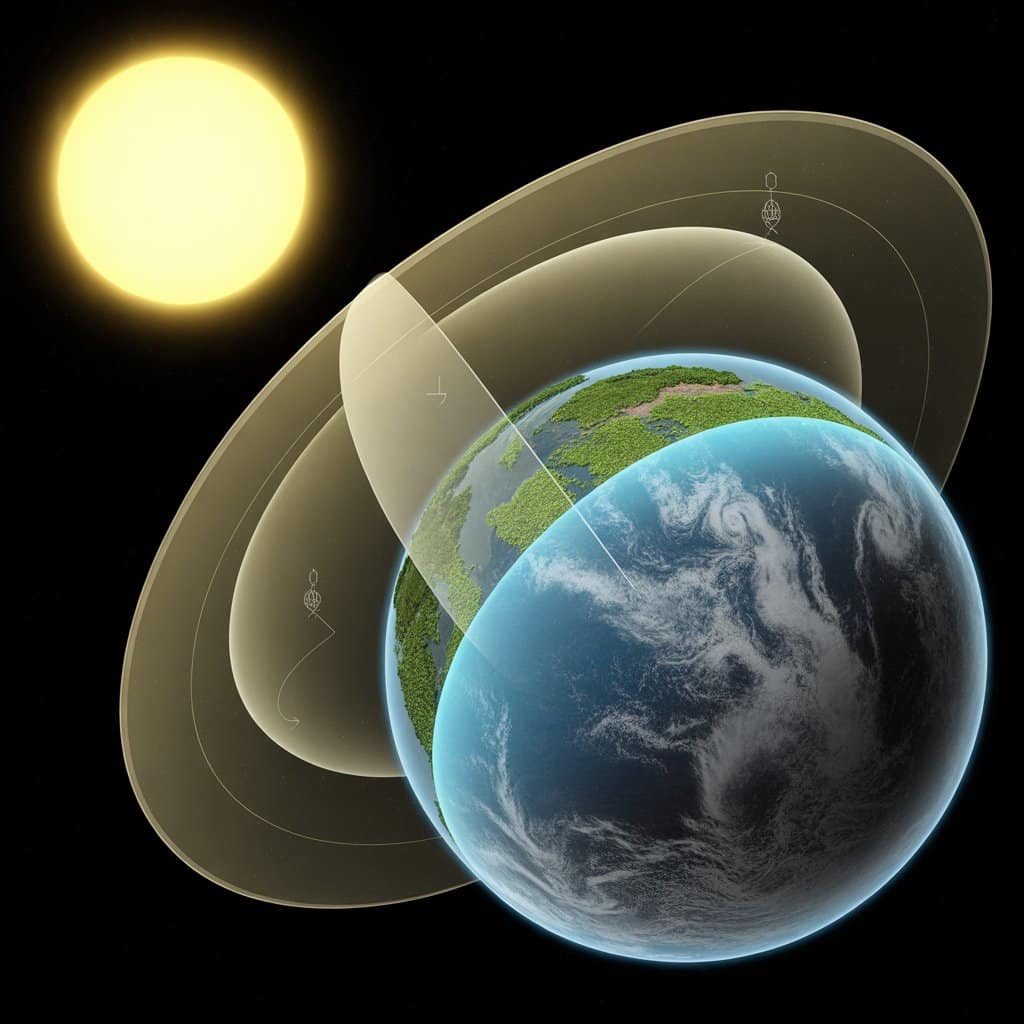
Of all the factors that decide whether a planet can sustain life, one of the most crucial is its positioning relative to its star. This zone is known as the “habitable zone“; many people refer to it as the Goldilocks Zone because its conditions are just right for life to exist.
Think of being close to a campfire: too close, and you burn; too far away, and you freeze. You need to be just at the right distance to have a comfortable feeling. That is in fact exactly how the concept of the habitable zone around a star works. The distance between a planet and its star would determine the surface temperature of the planet and if liquid water can exist on it. If it is too close, the liquid water will evaporate; if it is too far, then the water freezes.
The habitable zone depends on the size and type of a star. For instance, small stars like red dwarfs have their habitable zone much closer to them, while bigger stars like our Sun have a broader habitable zone. The ideal distance, however, isn’t just about the distance from the star. It also depends on the star’s size, brightness, and lifespan. While abundant, red dwarfs tend to have a much longer lifespan than bigger stars, making their habitable zones stable for billions of years—ideal for the potential development of life.
Earth’s Atmosphere: A Protective Shield
A very major factor in determining whether a planet can support life is its atmosphere. Earth’s atmosphere forms a shield, which protects us from harmful radiation from the Sun, while it traps the heat in a process known as the greenhouse effect. Without an atmosphere, Earth would be an icy wilderness, too cold to support life.
The Earth’s atmosphere is a somewhat uniform mixture that is mainly composed of nitrogen (78%), oxygen (21%), and trace gases such as carbon dioxide and argon. In fact, it is not only adequate for life as we know it, but also exactly what makes life possible. With oxygen, animals can breathe, and with carbon dioxide, plants can perform photosynthesis.
Some planets, however, have no such shield of protection. Others, like Venus, have extremely thick atmospheres that are mostly carbon dioxide, making a runaway greenhouse effect that results in global temperatures over 900°F (475°C), hot enough to melt lead. Yet Mars has an extremely thin atmosphere that cannot trap enough heat to maintain a warm environment. Because neither has a thick, insulating atmosphere, neither Venus nor Mars can support life as we know it.
The Importance of Water: Life’s Elixir
Water is vital for life on Earth. It is a solvent for nutrients, providing the medium through which chemical reactions occurring in living organisms can take place. The Earth has plenty of water—rivers, oceans, lakes, and glaciers all hold large amounts of liquid water. In every environment, from the harshest deserts to the deepest oceans and freezing polar caps, there is some form of life.
But water isn’t just important in its liquid form. The presence of water in different states-ice, liquid, or vapor-can provide valuable clues about a planet’s potential to support life. Frozen water, for example, has been found beneath the surface of Mars, while on several of Jupiter’s moons, including Europa, there is believed to be subsurface oceans beneath thick layers of ice. While these bodies of water may not be easily accessible, their existence suggests that life could potentially exist, even in environments far colder than Earth.
Water is also key to the quest for life on exoplanets. Today, scientists have very advanced tools that are able to detect water vapor in the atmospheres of distant planets. If water vapor exists under the right conditions, then those could certainly suggest that the planet has the potential for sustaining life. The discovery of water vapor on the exoplanet K2-18b caused a stir in 2019, firmly placing the planet within the habitable zone of the star and suggesting that liquid water could exist on the surface.
Chemical Ingredients: The Building Blocks of Life
Life on Earth is based upon carbon, an element capable of forming complex, stable molecules. Carbon-based life is the only life we know, but scientists also consider the possibility for other biochemistries. Silicon, like carbon, is able to form a variety of different types of bonds, and many theorists have speculated about silicon-based life. However, this remains highly speculative and is one of the great unknowns in astrobiology.
The search for Earth-like planets isn’t just about finding planets with liquid water; it’s also about finding planets that contain the necessary chemical building blocks for life. Life on Earth is based on elements such as carbon, nitrogen, oxygen, and phosphorus, which are used to create complex molecules such as DNA and proteins. Any potentially life-bearing planet must be composed of these elements and allow for complex chemical life processes.
Can We Find Earth-like Planets?
With the development of advanced telescopes, especially with the pioneering missions like Kepler Space Telescope and the forthcoming James Webb Space Telescope, we find Earth-like planets every year in increasing numbers. By today, thousands of exoplanets have been discovered, most of them located within the habitable zones of their stars.
The Trappist-1 system contains, for example, seven Earth-sized planets, three of which occupy a habitable zone of their star. Its discovery was highly exciting because it showed the possibility of multiple Earth-like planets existing within one star system. Such a finding stresses how common Earth-like planets could be throughout the universe.
But finding an Earth-like planet in the habitable zone is just the beginning. Researchers must also consider a number of other factors that may mean life as we know it could not exist there. For instance, the size of the planet is one factor-it needs to be big enough to support an atmosphere, yet small enough to avoid becoming a gas giant similar to Jupiter. A planet would also need a magnetic field to protect it against harmful radiation and solar winds that might strip its atmosphere.
The Search for Water and Other Signs of Life
Beyond the search for planets within the habitable zone, new methods are being developed to find life, even from billions of miles away. One of the most powerful tools to do this is spectroscopy-the study of the way light and matter interact. By analyzing the light that a distant planet emits or reflects, scientists can identify gases such as oxygen, methane, and carbon dioxide-those usually associated with life processes on Earth.
Another exciting development in the search for life is the detection of biosignatures—chemical compounds or gases that are produced by living organisms. For example, methane in a planet’s atmosphere may be considered indicative of life, since on Earth methane is mostly produced by microbes and animals. The detection of these biosignatures would yield strong evidence that life could exist, or may have existed, on a given planet.
Why Does it Matter to Us?
While the search for habitable planets may seem like a far-off quest, it has deep and abiding implications for us here on Earth. If we can better understand what makes one planet habitable, we will know how to protect our own. Earth is facing unprecedented challenges, from climate change to resource depletion, and learning how to maintain the habitability of our planet is just as important as finding another to move to.
The search for Earth-like planets also raises profound philosophical questions. If we find out that life indeed exists elsewhere in the universe, it may completely reshape our understanding of our place within the cosmos. On the other hand, if Earth were found to be unique, that would remind us how precious and fragile it is, so we should take better care of it.
Philosophical implications: Are we alone?
The discovery of life elsewhere would have immense philosophical ramifications. This would also challenge the perceived uniqueness of Earth in the vast universe. Are we the only intelligent beings or there are countless others, each with their own view of the cosmos? The search for extraterrestrial life is not merely finding another place to live; it is to learn about our place in the universe and to confront deep questions regarding life.
Conclusion: The journey continues
Far from being over, the search for habitable planets has actually only just begun. Every time another discovery is made, we take one more step toward answering one of humanity’s oldest and most profound questions: Are we alone in the universe? But then, the search for life beyond Earth is not about finding new homes for humanity but rather about understanding what exactly makes Earth special, how best we can protect it, and how to learn in coexistence with the universe that surrounds us.
As we reach out to space, let us not forget to care for our own planet. While searching beyond this world may offer new opportunities, the future of life on Earth is determined by how we manage resources and our environment on our home planet.
Frequently Asked Questions (FAQs)
1. What is planetary habitability?
Planetary habitability is defined as the suitability of a celestial body to provide conditions necessary for life. Liquid water, a suitable atmosphere, and proper chemical composition are only a few of the many elements that might make such a planet habitable.
2. How do scientists detect whether a planet is habitable or not?
The tools used by scientists include spectroscopy, which enables them to study the light emitted or reflected by distant planets. Such studies help in the identification of various gases, including oxygen, methane, and carbon dioxide, associated with living things. Scientists also study the size and atmosphere of planets using direct imaging and other techniques.
3. What is so special about Earth when compared with other planets?
The position of Earth in the habitable zone, combined with a stable atmosphere, liquid water, and a magnetic field, results in Earth being uniquely suited for life. These actually work in tandem to provide a delicately balanced environment wherein life can be supported.
4. Can there be life on other planets?
Now, although we lack definitive evidence of extraterrestrial life, the discovery of exoplanets within their host stars’ habitable zones gives credence to the possibility. Also, searches for biosignatures and the investigation of extremophiles, or life living out their existence under conditions harsh or extreme, provide further suggestions that life could exist in forms unlike any known to us.
5. Why is it important to find planets like Earth?
Understanding Earth-like planets helps us understand the intricacies of what makes Earth habitable and may even provide some insight to help protect our environment. It also challenges humankind with the possibility that life does indeed exist somewhere else in the universe.
Disclaimer:
The content of this article is intended for informational purposes only. While the information provided is based on the current understanding of planetary habitability and scientific research, it should not be considered as definitive evidence or expert advice. The theories and concepts discussed, including the potential for life on other planets, are based on ongoing research, and new discoveries may alter our current understanding. We encourage readers to explore additional sources and consult scientific experts for a deeper understanding of the topics covered.
If you liked this post Visit Other Posts Click Here.
2 thoughts on “Understanding Planetary Habitability: The Search for Earth’s Twin”