

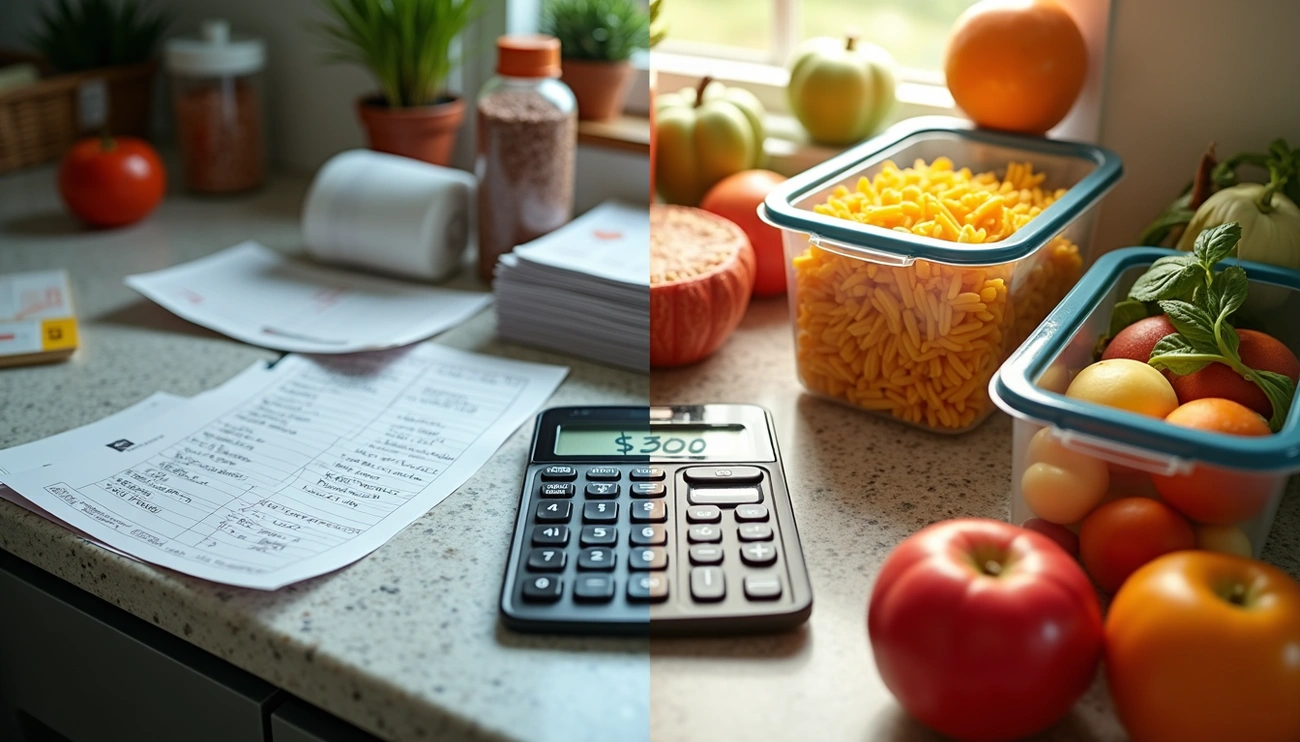
How to save money on groceries has become a critical skill with food prices up 31% since 2019. After rent or mortgage, food costs often take the next biggest chunk of our budget, consequently making grocery savings a top financial priority for many households. When I decided to tackle my own grocery spending, I saved a whopping $347 in the first month!
With grocery costs in flux due to inflation, tariffs, and other factors, finding ways to save money at the grocery store without sacrificing quality has become essential. I discovered that a $150 weekly grocery trip would jump to $187.50 for the exact same items when they weren’t on special. Furthermore, average food-at-home prices are still 1.2% higher compared to 2023. In this article, I’ll share the best ways to save money on groceries that helped me cut my bill by $300, including practical tips for saving money on groceries that anyone can implement right away.
Step 1: The Turning Point – Why I Had to Change My Grocery Habits
For years, I was that person who wandered aimlessly through grocery store aisles, tossing whatever looked appealing into my cart. I’d often leave with a receipt total that made me wince, but I’d quickly forget about it until the next shopping trip. Little did I know, my casual approach was costing me hundreds of dollars every month.
How my grocery bill spiraled out of control
My grocery spending started creeping up gradually, but then accelerated rapidly. I wasn’t alone in this experience – about 7 in 10 Americans report spending more on groceries compared to last year. Between September 2024 and September 2025 alone, food prices increased by 2.7%, continuing a trend that saw food costs surge by 26% since 2020.
Looking back, I made nearly every classic grocery overspending mistake:
- Shopping without a list or meal plan
- Grabbing whatever caught my eye (especially those tempting end-cap displays)
- Buying pre-cut produce at a premium
- Throwing away spoiled food I never got around to using
Additionally, I often shopped while hungry, which research shows leads to significantly higher spending. I was effectively volunteering to pay more for less food.
The moment I realized I needed a plan
My breaking point came when I reviewed my monthly credit card statement. Food expenses were consuming over 15% of my take-home pay – well above the 10-11.2% that most households spend on groceries. What’s more, I was throwing away roughly 20 pounds of food monthly – nearly $200 worth for my household.
That’s when reality hit me: my disorganized approach wasn’t just wasteful – it was financially unsustainable. With food prices continuing to climb and more than half of Americans reporting grocery expenses as a major source of stress, I knew something had to change.
Setting a realistic savings goal
After assessing my spending habits, I set a feasible budget with a specific savings target. According to financial experts, reducing a weekly grocery bill by just $20 can lead to annual savings exceeding $1,000. I aimed higher, targeting a $75 weekly reduction – which would translate to $300 monthly savings.
The key insight that changed everything: the bulk of grocery savings comes from shopping store sales. I realized I needed to fundamentally change not just what I bought, but how and when I purchased it.
Step 2: Planning Ahead – The Foundation of Saving Money on Groceries

Image Source: Etsy
After tracking my spending, the next logical step in my grocery savings journey was creating a solid plan before shopping. Planning ahead became the foundation of my entire money-saving strategy.
Creating a weekly meal plan
My first revelation was discovering how meal planning directly impacts the bottom line. Planning meals in advance gives you a roadmap for the week ahead, helping you make intentional food purchases instead of random selections. I typically start by setting aside 30 minutes before my weekend grocery trip to plan the upcoming week. This simple habit saved me both time and money—roughly 20-25% off my grocery bill—primarily by reducing those multiple mid-week store runs that always resulted in extra purchases.
Using the store’s sales flyer to guide meals
In essence, the sales flyer became my secret weapon. Rather than deciding what I wanted to eat and then shopping accordingly, I flipped the script. Now, I scan the weekly sales first, then build my meal plan around what’s discounted. This small change makes a massive difference, as seasonal deals typically offer the best value. Moreover, focusing on sale proteins (typically the most expensive items on your list) maximizes savings. By planning around these weekly specials, many shoppers save $30-50 each week.
Building a smart shopping list
Once I’ve planned meals, I create my shopping list in two steps. First, I take inventory of what I already have (checking fridge, freezer, and pantry), which prevents buying duplicates. Next, I organize my list by store layout to prevent backtracking through aisles. This organization system reduces impulse purchases dramatically—the exact items that used to blow my budget.
Assigning meals to specific days
The final piece involves looking at my actual schedule. I review upcoming events, late work nights, and family activities before assigning meals to specific days. On busy evenings, I plan quick recipes. For days with more time, I schedule meals requiring more preparation. This practical approach ensures I don’t abandon the plan when life gets hectic—ultimately keeping my savings intact.
Read other Articles: Why Medical Experts Are Turning to Nano-Scale Solutions for Chronic Diseases
Step 3: Smarter Shopping – How I Changed My Store Habits
With my meal plan and shopping list in hand, I was ready to tackle the next challenge: changing my actual in-store habits.
Shopping with a list and sticking to it
My first rule became non-negotiable: never shop without a list. Studies show that a strong list neutralizes most store marketing tactics. I found that knowing my specific goals before entering and physically checking items off provided a tactile reminder that kept me focused. On balance, this single habit prevented countless impulse purchases.
Avoiding impulse buys and distractions
Grocery stores count on our impulse buying—indeed, consumer experts say two-thirds of what we buy in supermarkets we had no intention of purchasing. Therefore, I implemented the two-minute test: when tempted by an unplanned item, I asked, “What specific meal will this support in the next seven days?” If I couldn’t answer quickly, I put it back.
Buying in bulk and freezing portions
For non-perishable items, buying in bulk delivered significant savings. I discovered that a 25-pound bag of organic oats cost $1.92 per pound versus $3.46 per pound for smaller packages—a 45% savings. Most importantly, I only bulk-bought items with long shelf lives or that could be properly frozen.
Choosing generic over name brands
Generic foods generally represent cost savings of 25-30% over name brands. In fact, many store brands are made in the same facilities as national brands but with simpler packaging. I tested numerous generics and found no noticeable difference in staples like sugar, flour, spices, and frozen vegetables.
Shopping alone and avoiding peak hours
Shopping solo became another money-saving strategy. Without others influencing my purchases, I stayed focused and spent less. Coupled with this, I shopped during off-peak hours—early mornings or late evenings—when shelves were freshly stocked and I could move efficiently through the store without distractions.
Read other Articles: How to Design a Thriving Indoor Garden in Your Apartment (Even in 50 Sq Ft)
Step 4: Stretching Every Dollar – What I Did After Shopping
Beyond planning and smart shopping, I discovered that my habits at home were equally important for stretching my grocery dollars further.
Cooking with pantry staples first
My first post-shopping strategy became “shop your pantry before shopping the store.” I began regularly inventorying what I already had and creating meals around these ingredients first. This practice prevented perfectly good food from expiring unused while simultaneously reducing my next shopping bill. Notably, pantry-first cooking helped me develop creative meal solutions using beans, rice, pasta, and canned goods.
Freezing leftovers and perishable items
Freezing quickly became my secret weapon against waste. I learned that food stored at 0°F remains safe indefinitely, though quality suffers with time. Previously, I’d watch fresh produce spoil in my refrigerator, but now I freeze extras before they deteriorate. For items like bread, cookies, soups, stews, cooked beans, and most meats, freezing works wonderfully. Typically, I portion meals into individual servings—like homemade TV dinners—making future meals convenient.
Making my own sauces and dressings
Store-bought dressings and sauces were silently inflating my grocery bills. As an alternative, I started making these items at home using simple ingredients. Homemade versions taste better and cost a fraction of commercial products. For instance, basic vinaigrettes require just oil and vinegar plus seasonings, while creamy dressings often need only Greek yogurt and herbs.
Using rewards programs and digital coupons
Finally, I maximized free loyalty programs like Kroger Plus, which saves customers an average of $576 annually. Similarly, I started “clipping” digital coupons through store apps, which automatically apply discounts at checkout. Ultimately, combining these strategies helped me trim my grocery bill significantly without sacrificing quality or nutrition.
Conclusion
Cutting your grocery bill significantly without sacrificing quality is absolutely achievable with the right approach. Throughout my journey, I’ve managed to save $300 monthly by changing not just what I buy, but how and when I purchase it. The combination of meal planning around sales, shopping with intention, and minimizing food waste has created a powerful savings strategy.
After implementing these changes, my financial stress decreased significantly while the quality of my food remained unchanged. Specifically, planning meals around weekly sales flyers had the biggest impact, followed closely by disciplined list-shopping and avoiding impulse purchases. Additionally, smart food storage practices ensured nothing went to waste.
Looking back at my transformation, the most surprising discovery wasn’t just the money saved but how quickly these habits became second nature. Grocery shopping shifted from a budget-draining chore to a strategic opportunity to save.
Your own grocery savings journey might look different depending on household size, location, and food preferences. Start by implementing one or two strategies—perhaps meal planning and list-making—before gradually adding more techniques. Over time, you’ll develop a personalized system that works specifically for your lifestyle.
Most importantly, consistency is key to achieving the greatest results. While my methods required some initial adjustment, they now take minimal effort while delivering substantial ongoing savings. The satisfaction of watching my grocery bills shrink by $300 monthly certainly outweighs the small effort required to maintain these habits.
FAQs
Q1. What are some effective strategies to save money on groceries? Plan your meals in advance, shop with a list, buy items on sale, choose generic brands over name brands, and cook in bulk to freeze portions for later. These strategies can help reduce impulse purchases and minimize food waste.
Q2. How can meal planning help cut grocery costs? Meal planning allows you to shop more efficiently by creating a precise shopping list, reducing impulse buys, and minimizing food waste. It can also help you take advantage of sales and use ingredients across multiple meals, potentially saving 20-25% on your grocery bill.
Q3. Is buying in bulk always a good way to save money on groceries? Buying in bulk can be cost-effective for non-perishable items you use regularly. However, it’s important to compare the price per unit and ensure you can use the product before it expires. For perishables, only buy in bulk if you can properly store or freeze portions.
Q4. How can I save money on groceries without sacrificing quality? Focus on buying seasonal produce, shop sales for proteins, use store loyalty programs and digital coupons, and consider less expensive cuts of meat. You can also make your own sauces and dressings, which are often cheaper and healthier than store-bought versions.
Q5. Are grocery delivery services or meal kits cost-effective for saving money? Generally, grocery delivery services and meal kits are not the most cost-effective options for saving money. While they offer convenience, cooking meals from scratch using ingredients you purchase yourself is typically much more economical in the long run.
Disclaimer
Results may vary. The savings described represent my personal experience and are not guaranteed. Food prices fluctuate based on location, seasonality, and market conditions.
Interested in similar content or opportunities. Contact Us