

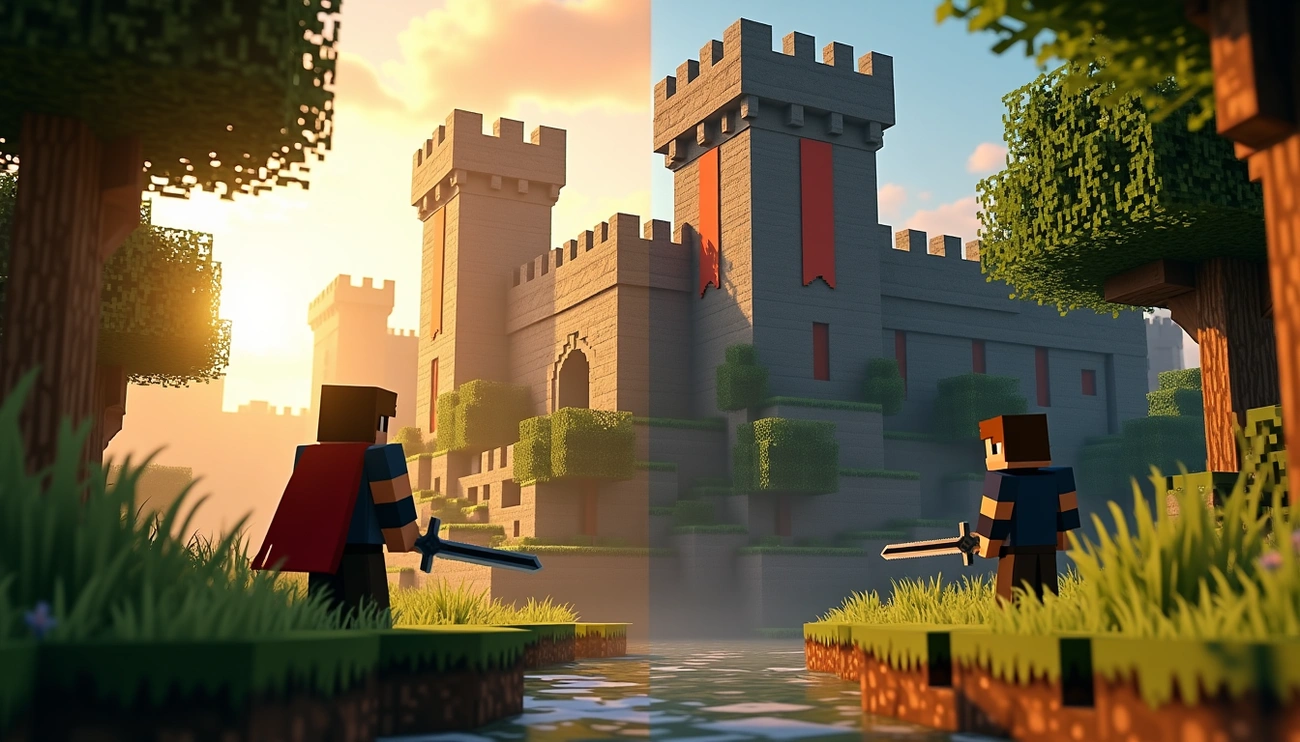
The Hytale game trailer garnered over 31 million views within just one month of its release, highlighting the immense anticipation for this sandbox adventure. Initially developed in 2015 by members of the Hypixel Minecraft server team with funding from Riot Games, Hytale officially entered early access on January 13, 2026, receiving positive feedback from the gaming community.
If you’re looking for a simple description of Hytale, calling it “Minecraft 2” might be the most fitting. While many games have drawn inspiration from Mojang’s trailblazer, Hytale feels like a true evolution of the genre rather than just another clone. The gameplay introduces several quality-of-life improvements, such as the ability to jump up to three blocks high and pull yourself up—a refreshing change from Minecraft’s one-block jump limit. Additionally, the combat system offers a variety of weapon options, from quick-slashing double daggers to traditional sword and shield combinations. The world itself is packed with a diverse range of biomes, from magical fairy-tale forests to ominous basalt islands.
In this article, we’ll dive into what makes Hytale stand out, explore its development journey, and analyze why it might ultimately surpass Minecraft as the premier sandbox crafting experience. After spending time with the early access version, I’m ready to share my insights on whether this ambitious project lives up to its promises.
Read other Articles – Risk of Rain 2 in 2026: Why This Roguelike Still Dominates After 100+ Hours
What is Hytale and how it compares to Minecraft
A quick overview of Hytale game genre and goals
Hytale occupies a unique position in the gaming landscape by blending the creative freedom of a sandbox with the structured progression of an RPG. At its core, the hytale game is an ambitious project that allows players to explore a procedurally generated world filled with dungeons, secrets, and diverse creatures, all while shaping it block by block. Unlike most voxel games, Hytale doesn’t restrict itself to a single genre – instead, it aims to support multiple playstyles whether you prefer being a settler, adventurer, or craftsperson.
The Early Access release focuses primarily on polishing core systems including exploration, responsive combat, and robust building mechanics, alongside creator-first tools for custom content. Moreover, Hytale encourages multiplayer interaction, allowing friends to share experiences and collaborate on world-building projects.
How Hytale builds on Minecraft’s foundation
Even a passing glance reveals Minecraft’s DNA in Hytale’s design. Created by former Minecraft modders, Hytale takes familiar concepts but enhances them with quality-of-life improvements. For instance, when placing roof slabs, you can preview where they’ll go before placement – eliminating the trial and error common in Minecraft.
Perhaps most notably, Hytale addresses a long-standing Minecraft complaint by including comprehensive furniture and decoration crafting options. Additionally, the world generation feels more deliberately designed, with biome transitions occurring within shorter walking distances.
The community connection remains strong as well, with impressive technical interoperability – within a week of Hytale’s early access launch, modders had already created functional crossplay between the two games.
Key differences in design philosophy
Despite similarities, Hytale’s development team led by Simon Collins-Laflamme is pursuing a distinct vision. “Many of us want something new, more combat-adventure-based, exploration and fantasy-based, and this is why we are making and playing Hytale,” explains Collins-Laflamme. “It’s not to compete with or replace Minecraft; we just want something that resonates with us”.
This philosophical difference manifests in several ways. Firstly, Hytale divides its world into themed Zones with rising difficulty levels, creating a meaningful sense of progression. Secondly, the crafting system feels more intuitive – instead of arranging resources in a grid, you simply select items from a menu if you have the necessary materials. Thirdly, the movement mechanics are more advanced, allowing players to climb up to four blocks high and pull themselves onto ledges.
Inside Hytale gameplay: what makes it stand out
Procedural world generation and biomes
Diving beneath Hytale’s surface reveals two world generators working in tandem. The V1 generator (2016-2020) powers the current Early Access, whereas V2 (in development since 2021) will eventually replace it completely. Although procedural, Hytale’s world generation remains deliberately curated – designers maintain significant control over content placement through pattern scanning systems that create immersive environments. Consequently, ash trees appearing above caves in deeproot biomes aren’t just decorative – they serve as visual hints for players seeking special resources below.
Combat system and enemy variety
In contrast to most sandbox games, Hytale features a tactical, reactive, and physical combat system. Each weapon type – from swords and battle axes to daggers and maces – provides distinct playstyles with unique attacks and signature moves. Sword users benefit from defensive, reactive gameplay with lunges and knockback abilities, whereas mace wielders focus on timing powerful blows that control battlefield flow. The combat system revolves around several pillars: advanced physics, stamina management, positioning, and modular magic.
Creative mode and modding tools
Creative Mode transcends typical sandbox editors by offering specialized tools like Scripted Brushes – asset-defined tools that generate mountains, paths, or ruins with simple drag-and-drop actions. Even more impressive are the Prefab Editor for structure modification, the Selection Tool for manipulating 3D spaces, and the Machinima Tool for creating animated camera movements. Players can customize their flight mechanics, adjust inertia, and change speeds for precision building.
Visual scripting and asset creation
Specifically designed for non-programmers, Hytale’s visual scripting resembles Unreal Engine’s Blueprints. This system empowers creators through a node-based interface that matches how designers naturally think about behaviors. Java programmers can extend this system by adding new visual nodes and optimizing performance-critical operations.
Multiplayer and community servers
Players can connect through the in-game server browser or join directly via IP addresses. The system allows filtering by gameplay type – adventure, co-op, competitive modes, or minigames. Simultaneously, the friends list enables directly joining worlds where friends are playing without exchanging addresses. As a result, communities can create diverse experiences from intense PvP combat to peaceful creative building spaces.
The journey of Hytale: from concept to early access
Origins and development timeline
The hytale game originated from necessity. In 2014, Mojang’s EULA changes restricted Minecraft servers from having gameplay-affecting microtransactions, causing an 85% revenue drop for the Hypixel server. This financial challenge prompted the team to create their own game. Development officially began in early 2015 with an initial budget of $750,000. Originally, the team wanted to avoid making another voxel-based game but ultimately decided to leverage their expertise in that genre.
Riot Games acquisition and delays
Following impressive growth and a viral trailer that garnered 31 million views within a month, Riot Games acquired Hypixel Studios in April 2020. Shortly thereafter, the entire hytale game engine underwent a dramatic shift – the client and server were rewritten from C# and Java to C++ in 2022. Unfortunately, the development timeline stretched far beyond initial expectations. Originally planned for a 2021 release, the hytale game faced multiple postponements as its scope continued to expand.
Cancelation and revival by original founder
On June 23, 2025, after over 10 years of development, Riot Games announced Hytale’s cancelation. However, the story didn’t end there. By August, Simon Collins-Laflamme, Hytale’s original founder, began negotiations to reacquire the game. On November 17, 2025, he successfully repurchased Hytale from Riot Games and quickly rehired over 30 former developers. Collins-Laflamme personally committed funding for the next decade, returning to the game’s original vision and legacy engine.
Early access launch and editions
Following this remarkable revival, Hytale entered early access on January 13, 2026. The launch offered three purchase options: Standard Edition priced at $19.99, alongside “Supporter” and “Cursebreaker (Founder’s Edition)” tiers. Despite being admittedly unfinished and containing bugs, the early access version included exploration mode, creative mode, and comprehensive modding support. Notably, Collins-Laflamme chose not to initially release on Steam, preferring to focus on the existing community.
Read other Articles – The Secret to Bypassing Roblox Age Verification (Working Method)
Why Hytale could surpass Minecraft in the long run
Modern engine and performance improvements
Hytale’s proprietary game engine undoubtedly gives it a technical edge, capable of powering striking block worlds while maintaining smooth performance. Behind the scenes, developers have worked to build a stronger technical foundation, including performance improvements and robust server systems. Players have even discovered that disabling the HUD increases FPS by approximately 60%, jumping from 250 to 400 FPS on certain systems.
More intuitive building and crafting systems
Hytale streamlines construction with thoughtful improvements like roof placement previews, eliminating the trial-and-error approach common in other voxel games. The crafting system revolves around specialized workbenches that expand capabilities as you upgrade them. In particular, players benefit from integrated storage that interacts with nearby workbenches, alongside hundreds of decorative blocks and furniture options.
Deeper RPG elements and exploration
The Memories system rewards exploration by allowing players to collect memories that must be returned to The Heart of Orbis, unlocking permanent upgrades for everyone in your world. The combat system features high mobility alongside diverse weapons with unique abilities. Beyond basic gameplay, community modders have already created RPG stat systems with leveling mechanics.
Community-driven development and feedback
The game is being built with modding at its core—indeed, everything players see can be changed, extended, or removed. Following early access, the team plans to expand by hiring over 15 World Designers primarily from the community. Ultimately, this creator-first approach is already bearing fruit, with Hypixel Studios hiring talented modders to work on official cosmetics.
Conclusion
The evolution from Minecraft to Hytale represents a significant leap forward in the voxel sandbox genre. After spending time with the early access version, I believe Hytale delivers on its promises through thoughtful quality-of-life improvements and deeper gameplay systems. The ability to climb ledges, preview block placements, and engage in tactical combat makes the moment-to-moment gameplay feel refreshingly modern.
Additionally, the zone-based world design creates a meaningful progression system while maintaining the sandbox freedom players expect. The specialized workbenches and integrated storage solve frustrations many Minecraft veterans have experienced for years. Combat especially stands out with its weapon variety and physics-based interactions, moving beyond the simple click-timing of its predecessor.
Despite its rocky development path, Hytale’s revival under Collins-Laflamme’s leadership seems to have refocused the project on what matters most – creating an engaging sandbox adventure with robust creative tools. The remarkable technical foundation supports both casual players and ambitious creators alike.
Though Hytale clearly builds on Minecraft’s foundation, it charts its own course with RPG elements, fantasy esthetics, and creator-first design philosophy. The game doesn’t try to replace Minecraft but instead offers something new for players seeking more adventure and fantasy in their block-building experiences.
Will Hytale eventually dethrone the king of sandbox games? It’s still too early to say definitively. Nevertheless, the early signs look promising. Players who value intuitive building tools, dynamic combat, and a more deliberate world design will certainly find plenty to love. For now, I’m excited to watch this game grow alongside its passionate community.
FAQs
Q1. How does Hytale compare to Minecraft in terms of gameplay? Hytale builds on Minecraft’s foundation but offers a more adventure-focused experience with improved combat, deeper RPG elements, and a curated world design. It features diverse biomes, tactical combat with unique weapon abilities, and robust creative tools for building and modding.
Q2. What are some key features that make Hytale stand out? Hytale boasts a modern game engine, intuitive building and crafting systems, more dynamic movement mechanics, and a rich fantasy world with bosses and dungeons. It also offers powerful modding tools and a visual scripting system, making content creation more accessible to players.
Q3. Is Hytale intended to replace Minecraft? No, Hytale is not meant to replace Minecraft. It’s designed as its own unique game that caters to players seeking a more adventure and fantasy-based experience while still offering sandbox elements. The developers aim to create a game that coexists with Minecraft rather than competing directly.
Q4. What is the current status of Hytale’s development? Hytale entered early access on January 13, 2026, after a long development process that included acquisition by Riot Games and subsequent repurchase by its original founder. The game is still in active development, with plans to expand features and polish existing systems based on player feedback.
Q5. How does Hytale support modding and community content creation? Hytale is built with modding at its core, offering powerful tools for content creation. It includes a visual scripting system similar to Unreal Engine’s Blueprints, making it accessible for non-programmers. The game also provides specialized tools for world editing, structure modification, and even machinima creation, empowering the community to easily create and share custom content.
Interested in similar content or opportunities. Contact Us