

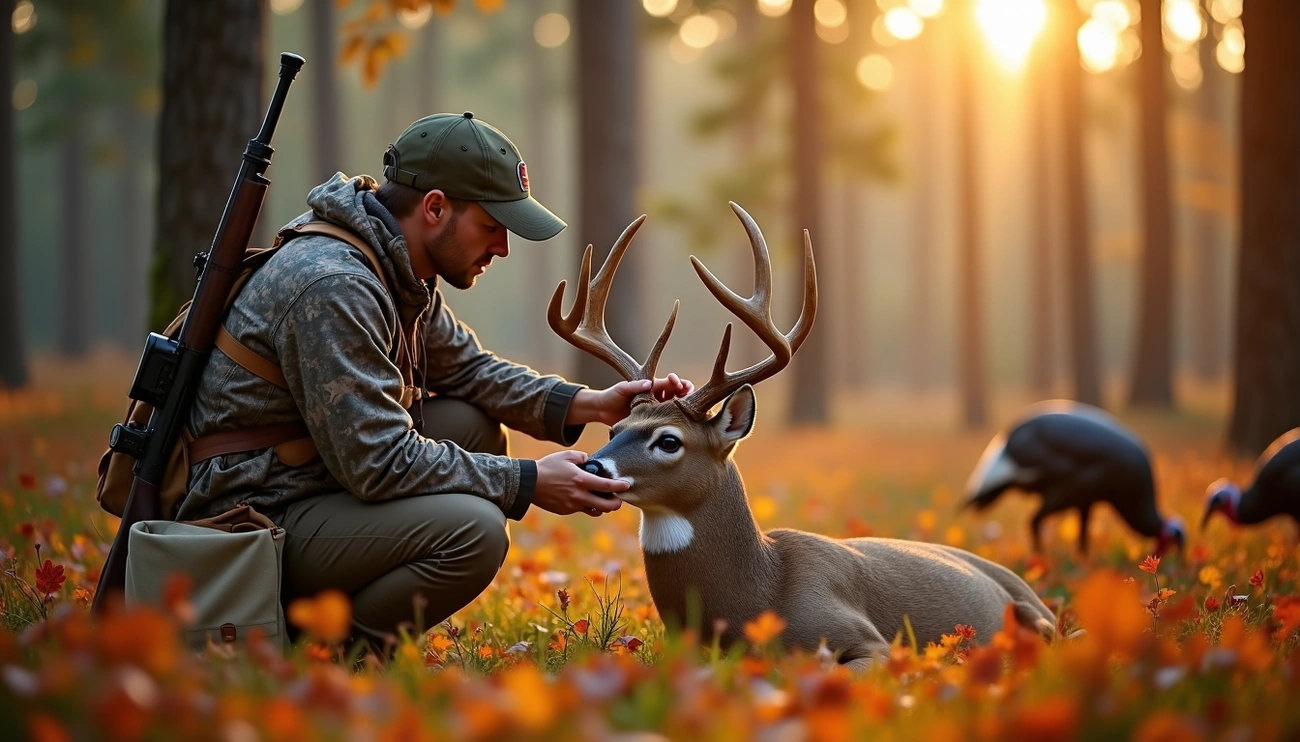
Is hunting ethical? This question has sparked heated debates among conservationists, animal rights activists, and hunters themselves for generations. The legacy of President Theodore Roosevelt, often called the father of American conservation, reminds us that hunting and conservation have been intertwined throughout American history. While some argue that no form of hunting can be ethical due to the psychological stress animals experience when being pursued, others point to the substantial contributions hunters make to wildlife conservation efforts.
When we discuss hunting ethics, we must acknowledge both sides of this complex issue. Ethical hunting practices center around respect for wildlife, which includes ensuring accurate shots for clean, humane kills. The concept of “fair chase” – defined by the Boone and Crockett Club (founded in 1887 by Theodore Roosevelt himself) as the “ethical, sportsmanlike, and lawful pursuit” of game without giving hunters an improper advantage – serves as the foundation for what many consider ethical hunting. However, the boundaries between what’s legal and what’s ethical aren’t always clear-cut.
In this guide, I’ll explore the historical roots of conservation through hunting, what defines ethical hunting today, and why these practices matter for wildlife preservation. Whether you’re a seasoned hunter looking to refine your approach or someone questioning the morality of hunting altogether, this honest examination aims to provide clarity on an often misunderstood tradition.
The roots of ethical hunting
The ethical foundation of hunting in America can be traced to a pivotal moment in 1902. During a Mississippi hunting trip, President Theodore Roosevelt refused to shoot a bear that had been tied to a tree, deeming it “unsportsmanlike”. This single act of conscience fundamentally shaped modern hunting ethics.
The legacy of Theodore Roosevelt
Roosevelt, an avid sportsman-hunter, witnessed firsthand the decimation of American wildlife. Throughout his presidency (1901-1909), he protected approximately 230 million acres of public land. His conservation legacy included establishing 150 national forests, 51 federal bird reserves, 4 national game preserves, 5 national parks, and 18 national monuments. Roosevelt understood that ethical hunting requires conservation, famously stating: “We have become great because of the lavish use of our resources. But the time has come to inquire seriously what will happen when our forests are gone…”.
Indigenous traditions and respect for wildlife
Native American hunting traditions offer perhaps the oldest model of ethical hunting practices. For indigenous peoples, hunting was never merely utilitarian but deeply spiritual. After a successful hunt, many tribes performed rituals thanking the animal for giving its life. “Wasting of any kind is a serious offense and, we believe, is punished by sickness or bad luck in future hunts,” explains Sandra Broncheau-Mcfarland, who carries Nez Perce and Cherokee ancestral teachings. Indigenous hunters traditionally used every part of the animal—not just for practical reasons but as an expression of profound respect.
How hunting shaped conservation laws
By the late 19th century, unregulated commercial hunting had pushed many species toward extinction. In response, Roosevelt formed the Boone and Crockett Club in 1887 specifically to end commercial wildlife slaughter and introduce a sporting code based on fair chase. This led to landmark legislation including the Migratory Bird Treaty of 1918, which regulated seasons and outlawed commercial hunting. The Pittman-Robertson Act of 1937 created an 11% excise tax on hunting equipment, generating over $12 billion for conservation efforts. Indeed, these hunter-supported laws became the financial backbone of American wildlife management.
Read other Articles – Top AI Tools to Simplify Office Work for Beginners
What makes hunting ethical?
Ethical hunting stands on four fundamental pillars that go beyond simply following the law. These principles form the code that responsible hunters live by, regardless of what game they pursue or where they hunt.
Fair chase and the role of skill
The cornerstone of ethical hunting is “fair chase,” defined by the Boone & Crockett Club as “the ethical, sportsmanlike, and lawful pursuit and taking of any free-ranging wild game animal in a manner that does not give the hunter an improper or unfair advantage”. Fair chase balances hunter skills against the animal’s natural abilities to escape. Consequently, ethical hunters avoid using vehicles, airplanes, electronic calling devices, or shooting animals in fenced enclosures. Fair chase emphasizes skill development rather than technological shortcuts, ensuring wildlife has a reasonable opportunity to evade capture.
Clean kills and minimizing suffering
Ethical hunters prioritize quick, clean kills above all else. This requires thorough knowledge of animal anatomy and shot placement—typically aiming for the heart-lung area just behind the shoulder. A well-placed shot puts the animal down almost immediately, minimizing suffering. Additionally, responsible hunters practice their marksmanship regularly, ensuring they can make fatal shots within their effective range. In cases where an animal is wounded, hunters are obligated to track it and dispatch it humanely.
Using the whole animal
A fundamental aspect of hunting ethics involves using as much of the harvested animal as possible. Essentially, ethical hunters demonstrate respect by avoiding waste. As one hunting educator notes: “By adopting a stronger nose to tail approach you will be honoring the animal in the best possible way”. This means utilizing not just the meat but also other parts like hide and bones, recognizing that doing so “more than doubles the amount of nutrition” available from each harvest.
Respecting seasons and limits
Hunting regulations exist to protect wildlife populations, ensure public safety, and promote sustainable hunting. Bag limits and seasons are carefully designed by wildlife biologists to maintain healthy animal populations. An ethical hunter recognizes these rules aren’t merely legal barriers but critical conservation tools. Following them demonstrates respect not only for the law but also for nature’s delicate balance.
Disclaimer: This article discusses ethical hunting practices based on widely accepted conservation principles. Individual hunters should always consult their local regulations and laws before hunting.
Hunting as a tool for conservation
Beyond ethical considerations, hunting plays a crucial financial role in wildlife conservation throughout America. Through a unique “user pays, public benefits” model, hunters contribute billions of dollars that fund wildlife programs, restore habitats, and maintain biodiversity.
How license fees fund wildlife programs
The backbone of wildlife conservation funding comes primarily from hunters. Approximately 60-80% of state wildlife agency budgets derive from hunting-related activities. This includes revenue from hunting licenses and excise taxes on firearms and ammunition through the Pittman-Robertson Act, which has generated more than $12 billion for conservation since 1937. In 2017 alone, over 15 million Americans purchased hunting licenses, generating more than $500 million for conservation efforts. Furthermore, these funds support not just game species but numerous non-game wildlife programs as well.
Habitat restoration and stewardship
Hunters actively participate in preserving wildlife habitats. Since 1934, over $1.1 billion from Federal Duck Stamp sales has conserved more than 6 million acres within the National Wildlife Refuge System. Moreover, hunting organizations fund critical habitat projects – the Rocky Mountain Elk Foundation, for instance, has protected or enhanced more than 7.9 million acres for elk and other wildlife since 1984. Notably, hunting areas often serve as wildlife buffers for national parks, expanding biodiversity zones.
Supporting biodiversity through population control
Wildlife biologists use regulated hunting as an effective management tool. Without natural predators in many areas, species like deer can overpopulate, leading to habitat degradation, disease transmission, and starvation. For example, at Parker River National Wildlife Refuge, annual deer hunts helped restore ecological balance after deer populations boomed in the 1980s, causing overbrowsing and declining herd health. Subsequently, these controlled hunts maintain stable wildlife populations while preserving habitat for numerous species.
Disclaimer: This article discusses ethical hunting practices based on widely accepted conservation principles. Individual hunters should always consult their local regulations and laws before hunting.
Read other Articles – The Quick Guide to Fix iPhone Overheating Issues While Charging
Public perception and the future of hunting
Public perception determines the future of hunting in America. According to recent surveys, 77% of Americans approve of legal hunting, yet this represents a 4% decline since 2021. Meanwhile, disapproval rose from 12% to 17% in the same period.
The impact of social media on hunting ethics
Social media creates both opportunities and challenges for hunting’s public image. Every photo shared becomes an ambassador for the entire hunting community. Accordingly, hunters must consider how their content might be perceived by non-hunters who ultimately determine hunting’s “social license” to continue. As one expert notes, “The notion of fair chase shapes public perception of hunting as recreation”.
Educating the next generation of hunters
Today’s hunting education goes beyond merely teaching skills. Programs increasingly emphasize respect for wildlife, habitat conservation, and ethical decision-making. This approach ensures hunting traditions remain strong, respected, and aligned with modern conservation principles. Through mentorship, young hunters learn that sustainability matters as much as skill.
Why ethical hunting still matters today
Ethical hunting represents far more than following regulations—it demonstrates hunters’ commitment to conservation ideals. Nevertheless, when asked about specific practices, over 25% of Americans lack knowledge about key hunting practices, underscoring the need for continued education. The future of hunting depends primarily on hunters themselves behaving as responsible stewards.
Disclaimer: This article discusses ethical hunting practices based on widely accepted conservation principles. Individual hunters should always consult their local regulations and laws before hunting.
Conclusion
Throughout this examination of hunting ethics, we’ve seen that the question “Is hunting ethical?” defies simple answers. Hunting, when practiced responsibly, represents a vital conservation tool rather than merely a recreational pursuit. The four pillars of ethical hunting—fair chase, clean kills, using the whole animal, and respecting regulations—serve as guideposts for hunters committed to wildlife stewardship.
The historical connection between hunting and conservation runs deep. Theodore Roosevelt’s legacy reminds us that ethical hunting requires conservation commitment. Additionally, hunter-generated funding continues to provide billions of dollars for wildlife management, habitat restoration, and biodiversity preservation. This financial support benefits countless non-game species, though many Americans remain unaware of this critical contribution.
Public perception plays a crucial role in shaping the future of hunting. While most Americans support legal hunting, this support hinges on hunters demonstrating ethical practices. With social media transforming every hunting photo into a potential representation of the entire community, ethical representation has become more important than ever.
True ethical hunting goes beyond merely following regulations; it requires respect for wildlife, a commitment to skill development, and an acknowledgment of our responsibility toward nature. Ethical hunters understand they are part of a larger conservation mission, acting as stewards rather than just consumers of natural resources.
For those questioning hunting ethics, recognizing this conservation partnership provides valuable perspective. Ethical hunters aren’t separate from conservation—they actively fund and contribute to it. The tradition of responsible hunting deepens our connection to wildlife and natural spaces, ensuring they will endure for future generations.
FAQs
Q1. How does hunting contribute to conservation efforts? Hunting plays a significant role in conservation through license fees and excise taxes on hunting equipment, which generate billions of dollars for wildlife programs and habitat restoration. Additionally, hunters actively participate in population control, helping maintain ecological balance in areas where natural predators are absent.
Q2. What defines ethical hunting practices? Ethical hunting is based on four main principles: fair chase, which ensures animals have a reasonable chance to escape; clean kills to minimize suffering; using as much of the harvested animal as possible; and respecting hunting seasons and bag limits set by wildlife management agencies.
Q3. How do hunting regulations support wildlife conservation? Hunting regulations, including seasons and bag limits, are designed by wildlife biologists to maintain healthy animal populations. These rules serve as critical conservation tools, helping to balance wildlife numbers with available habitat and food sources.
Q4. What impact does social media have on hunting ethics? Social media significantly influences public perception of hunting. Every photo or post shared by hunters becomes a representation of the entire hunting community. This increased visibility emphasizes the importance of ethical practices and responsible portrayal of hunting activities.
Q5. How are new generations of hunters being educated about ethics? Modern hunting education programs go beyond teaching basic skills. They emphasize respect for wildlife, habitat conservation, and ethical decision-making. This comprehensive approach ensures that new hunters understand the importance of sustainability and their role as stewards of nature.
Disclaimer
This article discusses ethical hunting practices based on widely accepted conservation principles. Individual hunters should always consult their local regulations and laws before hunting.
Interested in similar content or opportunities. Contact Us