

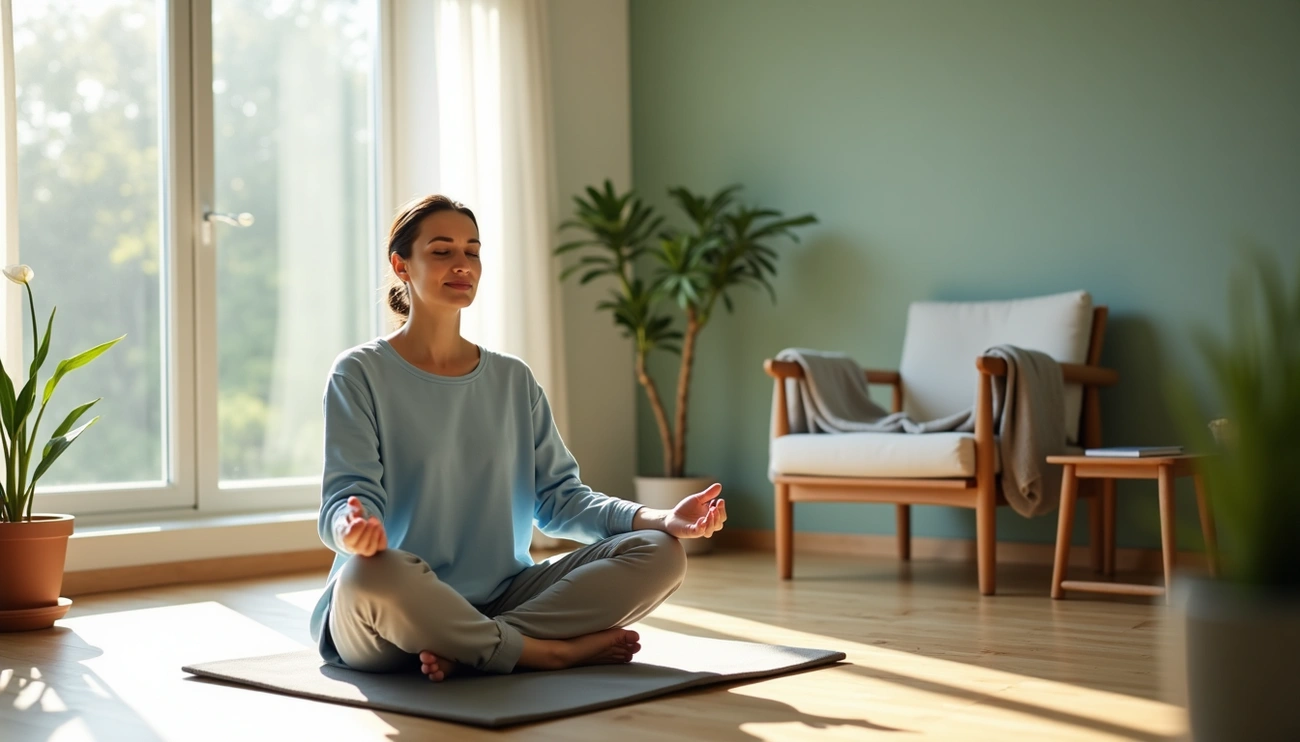
Anxiety affects millions of people worldwide, and mindfulness exercises for anxiety have shown remarkable effectiveness in helping manage this common condition. In fact, research on mindfulness-based interventions has increased exponentially over the past decade, with studies consistently demonstrating their efficacy in reducing anxiety and depression symptoms in various populations.
As therapists, we’ve seen firsthand how the connection between mindfulness and anxiety management can be transformative. According to comprehensive reviews, mindfulness practices for anxiety consistently outperform non-evidence-based treatments and even active control conditions like health education, relaxation training, and supportive psychotherapy. The most thorough review to date examined 209 trials of mindfulness-based interventions among 12,145 patients, showing large and clinically significant effects in treating anxiety and depression.
What makes these approaches so effective? Mindfulness, defined as the act of being present in the moment without judgment, works by helping individuals focus on the present moment while fostering non-judgmental awareness of thoughts and feelings. In this article, we’ll explore specific mindfulness techniques for anxiety that therapists actually recommend, how they work, and practical ways to incorporate them into your daily routine.
Understanding Mindfulness and Its Role in Anxiety
Mindfulness stands as a powerful approach for managing anxiety symptoms, with research showing comparable effectiveness to medication in certain cases. At its core, this practice represents a distinct mental skill that contrasts sharply with our typical daily experience.
What is mindfulness and how does it work?
Mindfulness refers to a mental state characterized by nonjudgmental awareness of present-moment experiences, including sensations, thoughts, bodily states, and surroundings. This practice encourages openness, curiosity, and acceptance rather than judgment or avoidance. Unlike our default mode of attention—which often involves mind wandering, running on autopilot, or critical rumination—mindfulness creates space between thoughts and reactions.
Essentially, mindfulness works by enhancing two key components: self-regulation of attention and an orientation toward the present characterized by curiosity and acceptance. Through regular practice, it trains the brain to respond more reflectively rather than reflexively to stressful situations.
The connection between mindfulness and anxiety
The relationship between mindfulness and anxiety management is particularly significant. When experiencing anxiety, people often struggle with distracting thoughts that hold excessive power. Mindfulness creates a pause between triggering events and reactions, allowing individuals to observe anxious thoughts without becoming overwhelmed by them.
Furthermore, neurobiological studies indicate mindfulness practices can affect brain plasticity. Research has demonstrated decreased activity in the amygdala (the brain’s stress response center) alongside increased activity in the prefrontal cortex (responsible for decision-making and emotional regulation). This neurological shift enables calmer responses to stress and emotional triggers.
Why therapists recommend mindfulness for emotional regulation
Therapists increasingly recommend mindfulness because it directly addresses emotion dysregulation—a core factor in many psychological disorders including anxiety. Through mindfulness practices, individuals develop metacognitive awareness, decrease rumination, and enhance attentional capacities.
Additionally, clinical trials support its effectiveness—a guided mindfulness-based stress reduction program proved as effective as escitalopram (a standard antidepressant) for anxiety disorders. Unlike medication, mindfulness empowers individuals to take an active role in managing their anxiety by developing acceptance, self-awareness, and self-compassion.
Read other Articles – The Secret to Bypassing Roblox Age Verification (Working Method)
Core Mindfulness-Based Therapies Used by Professionals
Professional therapists utilize several structured mindfulness-based interventions that have gained significant empirical support for treating anxiety disorders. These evidence-based approaches offer systematic frameworks for implementing mindfulness practices within therapeutic settings.
Mindfulness-Based Stress Reduction (MBSR)
Developed by Jon Kabat-Zinn in the 1980s, MBSR is perhaps the most well-known mindfulness intervention with extensive empirical backing. This 8-week program consists of weekly 2-2.5 hour group sessions, daily 45-minute home practices, and a day-long retreat during the fifth or sixth week. Originally created for chronic pain patients, MBSR teaches participants to mindfully attend to bodily sensations through various practices including sitting meditation, body scans, and gentle yoga. Studies comparing MBSR to active control conditions demonstrate its superiority in reducing anxiety symptoms with effect sizes comparable to cognitive behavioral therapy (Cohen’s d = 1.06). Moreover, recent research found MBSR to be as effective as escitalopram (a standard antidepressant) for treating anxiety disorders.
Mindfulness-Based Cognitive Therapy (MBCT)
MBCT, developed by John Teasdale, Zindel Segal, and Mark Williams, combines mindfulness training with cognitive therapy principles to prevent depression relapse. While following MBSR’s 8-week structure, MBCT uniquely helps individuals recognize mood deterioration without judgment and disengage from negative thinking patterns. Research demonstrates MBCT effectively reduces current depression symptoms (Hedge’s g = 0.73) and has been approved by the UK National Institute of Clinical Excellence as an effective treatment for depression relapse.
Acceptance and Commitment Therapy (ACT)
Developed by Steve Hayes, ACT focuses on psychological flexibility rather than symptom reduction. Although it rarely uses the term “mindfulness,” ACT employs practically identical strategies by teaching clients to observe internal phenomena without attempting to change them. This approach helps individuals accept anxiety while taking action aligned with personal values. Studies indicate ACT may outperform standard cognitive behavioral therapy among individuals with comorbid anxiety and mood disorders.
Dialectical Behavior Therapy (DBT)
Created by Marsha Linehan for borderline personality disorder, DBT incorporates mindfulness as a core component to help clients synthesize the dialectic between acceptance and change. Unlike other approaches, DBT teaches mindfulness as part of a comprehensive skills training program that includes interpersonal effectiveness, emotion regulation, and distress tolerance. DBT mindfulness skills are categorized as “what” skills (observe, describe, participate) and “how” skills (non-judgmentally, one-mindfully, effectively).
Note: These mindfulness-based therapies should be conducted under the guidance of trained professionals. Individual results may vary.
8 Therapist-Recommended Mindfulness Exercises for Anxiety
The most effective mindfulness exercises for anxiety are those that can be easily integrated into daily life. These therapist-recommended practices help calm an overactive nervous system and bring awareness to the present moment.
1. Mindful breathing
Mindful breathing involves focusing your attention on your breath without trying to change it. Deep breathing exercises activate the parasympathetic nervous system, producing a relaxing effect that immediately calms you down and improves your mood during periods of high stress. The 4-7-8 technique is particularly effective: breathe in through your nose for 4 seconds, hold for 7 seconds, then exhale through your mouth for 8 seconds.
2. Body scan meditation
This practice involves systematically bringing awareness to different parts of your body from head to toe. Body scanning helps reduce stress by activating the parasympathetic nervous system and lowering cortisol levels. Starting at the top of your head, notice sensations in each part without judgment as you gradually move downward through your body.
3. Grounding with the 5-4-3-2-1 technique
The 5-4-3-2-1 technique helps interrupt anxiety cycles by engaging your five senses: identify 5 things you see, 4 things you can touch, 3 things you hear, 2 things you smell, and 1 thing you taste. This technique shifts focus from anxiety-inducing thoughts to immediate sensory input, calming the nervous system and promoting mindfulness.
4. Thought noting and labeling
Noting involves acknowledging thoughts without getting caught up in them. Simply label experiences as “thinking,” “feeling,” or “sensing”. Research shows this practice helps regulate emotions by creating distance between you and your thoughts, reducing their emotional impact.
5. The RAIN technique
RAIN stands for: Recognize what’s happening, Allow the experience to be there, Investigate with care, and Nurture with self-compassion. This framework helps manage anxiety by pausing to acknowledge challenging feelings instead of resisting them.
6. Mindful walking
Mindful walking combines movement with mindfulness for a double benefit. As you walk, pay attention to bodily sensations, notice how your feet feel against the ground, and expand awareness to surroundings. This practice helps reconnect with your environment instead of ruminating on anxious thoughts.
7. Loving-kindness meditation
This practice involves directing positive phrases toward yourself and others: “May I be safe, happy, healthy, and live with ease”. Studies show loving-kindness meditation significantly increases positive emotions like joy, gratitude, and contentment, helping counter anxiety.
8. Mindful journaling
Journaling mindfully involves writing without censoring or editing thoughts. This practice helps sort through complex feelings, gain insight into triggers, and track emotional patterns. For anxiety specifically, it creates space to acknowledge what you experience without judgment.
Note: These mindfulness techniques for anxiety should be practiced regularly for maximum benefit. Consult a mental health professional for personalized guidance.
Read other Articles – The Science-Backed Benefits of 3 Day Fasting: What I Learned After 10 Fasts
How to Practice Mindfulness for Anxiety in Daily Life
Integrating mindfulness into your everyday routine creates a foundation for managing anxiety consistently. Let’s explore practical ways to incorporate these practices into your daily life.
Creating a mindfulness routine
Establishing a structured mindfulness practice helps reduce anxiety by providing stability and predictability. Start with a brief morning ritual—even 5-10 minutes of meditation can reduce anxiety symptoms by up to 30%. Consider adding mindful moments throughout your day:
- Begin your morning with intention before checking devices
- Schedule short mindfulness breaks during work hours
- End your day with a calming practice like body scanning
The key isn’t perfection but consistency—small, intentional habits practiced regularly yield significant benefits over time.
Using mindfulness apps and tools
Mindfulness apps make practice accessible wherever you encounter stressful situations. Research shows apps like Calm and Headspace can be as effective as in-person classes. Popular options include:
- Headspace: Offers courses for beginners and specific situations
- Insight Timer: Features a vast free library of guided meditations
- Calm: Provides sleep stories and anxiety-specific content
The best app is simply the one you’ll use consistently.
Adapting practices to different anxiety triggers
Customize mindfulness techniques based on your specific anxiety triggers. For work stress, try brief breathing exercises between tasks. During social anxiety, practice grounding techniques beforehand. For sleep-related anxiety, guided body scans can be particularly effective.
Tracking progress and emotional shifts
Monitor your mindfulness journey by tracking:
- Subjective anxiety levels using a 1-10 scale
- Sleep quality improvements
- Physical symptoms like muscle tension
- Overall sense of wellbeing
Apps often include progress tracking features, helping you identify patterns and improvements over time.
Note: While mindfulness can significantly reduce anxiety symptoms, it works best as part of a comprehensive approach to mental health. Consult a healthcare professional for personalized guidance.
Conclusion
Mindfulness offers a powerful approach to anxiety management, supported by substantial scientific evidence and clinical experience. Throughout this article, we’ve explored how mindfulness creates space between triggering events and our reactions, allowing us to observe anxious thoughts without becoming overwhelmed by them. Structured approaches like MBSR and MBCT provide systematic frameworks that can be as effective as medication for many people, while techniques like mindful breathing and body scanning offer practical tools to use whenever anxiety strikes.
Most importantly, mindfulness empowers us to take control of our mental health. Instead of merely reacting to anxiety, we learn to respond with awareness and compassion. Many patients report that regular practice of these techniques gradually transforms their relationship with anxious thoughts. Small, consistent efforts lead to significant results over time.
The beauty of mindfulness is its accessibility. Anyone can start with just a few minutes daily, focusing on breath or bodily sensations. These practices help calm an overactive nervous system and build resilience against future stress. Many find that mindful walking or the 5-4-3-2-1 grounding technique works particularly well during acute anxiety episodes.
Additionally, combining different mindfulness practices often proves more effective than relying on a single approach. Pairing morning meditation with mindful moments throughout the day creates a foundation of awareness that helps manage unexpected anxiety triggers. Technology has made these practices more accessible than ever, with apps providing guidance wherever and whenever needed.
Remember, mindfulness is a skill that improves with consistent practice. Though benefits may be felt quickly, the deepest transformations occur gradually as neural pathways strengthen through repetition. Patience and self-compassion are key elements of this journey.
While mindfulness is highly effective, it may not resolve all anxiety symptoms for everyone. We recommend consulting a qualified mental health professional to develop a comprehensive treatment plan tailored to your needs. Mindfulness works best as part of an integrated approach to mental wellness, which may include therapy, lifestyle modifications, or medication when appropriate.
FAQs
Q1. How quickly can I expect to see results from practicing mindfulness for anxiety? While some people may experience immediate relief, the most significant benefits of mindfulness for anxiety typically develop over time with consistent practice. Many individuals report noticeable improvements in their anxiety symptoms within a few weeks of regular practice.
Q2. Can mindfulness exercises replace medication for anxiety? Mindfulness exercises can be highly effective for managing anxiety, and in some cases, may be as effective as medication. However, it’s important to consult with a healthcare professional before making any changes to your treatment plan. For some individuals, a combination of mindfulness and medication may be the most beneficial approach.
Q3. What’s the best time of day to practice mindfulness for anxiety? The best time to practice mindfulness is whenever you can consistently fit it into your schedule. Many people find that starting their day with a short mindfulness practice helps set a calm tone for the day. However, incorporating brief mindful moments throughout the day can also be very effective for managing anxiety as it arises.
Q4. Are there any risks or side effects associated with mindfulness practices? Mindfulness is generally considered safe for most people. However, some individuals may experience temporary discomfort or increased awareness of difficult emotions when first starting a mindfulness practice. If you have a history of trauma or severe mental health conditions, it’s advisable to practice under the guidance of a trained professional.
Q5. How long should each mindfulness session be to effectively reduce anxiety? The length of mindfulness sessions can vary based on individual needs and schedules. Even short 5-10 minute sessions can be beneficial for reducing anxiety. Consistency is often more important than duration, so it’s better to practice regularly for shorter periods than to have infrequent longer sessions. As you become more comfortable with the practice, you may naturally extend your sessions.
Disclaimer
The mindfulness exercises described in this article are not intended to replace professional medical advice, diagnosis, or treatment. Always seek the guidance of your physician or qualified mental health provider with any questions regarding your condition. Results from mindfulness practices vary among individuals.
Interested in similar content or opportunities. Contact Us